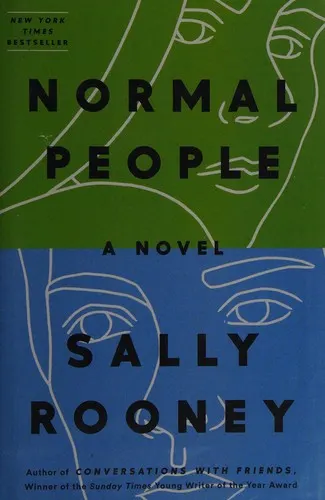
About Normal People
Connell Waldron and Marianne Sheridan go to the same school in Carricklea, a small town in the west of Ireland. At school, Connell is popular and quietly clever. Marianne is clever too, but she is an outsider, and the other students mock her. Connell’s mother, Lorraine, cleans the Sheridans’ large house, which is how the two of them start talking. They begin a secret relationship that Connell hides from his friends. Then they both go to Trinity College Dublin, and the social positions flip. Marianne fits in with ease. Connell feels out of place and short of money. Sally Rooney follows them over about four years, as they come together, drift apart, and come back again. The novel was adapted into a television series in 2020. It works well for book clubs because almost every reader has an opinion about Connell and Marianne, and the arguments about why they keep missing each other can run for an hour.
Discussion questions for Normal People
The relationship starts in secret because Connell is afraid of what his friends will think. How does that first secret shape everything that follows? Did you forgive him for it?
Lorraine cleans the Sheridans’ house. How does money show up between Connell and Marianne, both at school and at Trinity? Which moments made the class gap feel sharpest to you?
In Carricklea, Connell belongs and Marianne does not. In Dublin, it is the other way round. What does the novel suggest about how much of “who we are” depends on where we are standing?
Many of the couple’s biggest problems come from things they do not say. Pick one misunderstanding that frustrated you. Was it believable, or did you want to shake them?
Rooney leaves out quotation marks for dialogue. Did that choice draw you in, or make the book harder to follow? How did it change the way you heard the characters’ voices?
Lorraine is one of the few adults in the book who speaks plainly and acts with care. What role does she play in Connell’s life, and in Marianne’s?
Marianne’s home life is cold and, at times, frightening. How does the novel connect what happens in her family with the way she sees herself in later relationships?
Connell struggles with anxiety and depression at university. How did you feel about the way the novel describes his mental health, and the help he finally seeks?
Both characters are very intelligent and very good at exams. Does their cleverness help them understand each other, or get in the way?
The novel moves forward in jumps of weeks or months. What do you think Rooney gains by skipping over time, and what do we miss?
Connell and Marianne each date other people over the course of the book. What do those other relationships show us about what they want from each other?
The title is ordinary on purpose. What does “normal” mean to Connell, and what does it mean to Marianne? Do either of them ever feel normal?
Themes in Normal People
Love as a long conversation
Connell and Marianne’s relationship is never simple. They are lovers, then friends, then strangers, then close again. Rooney is interested in how two people shape each other over years, even when they are not together. The book asks if a bond can be real and lasting without ever being settled.
Class and belonging
Connell is the son of a single mother who cleans houses. Marianne comes from a wealthy family. At school, popularity hides the gap. At Trinity, money, holidays, and confidence make it hard to ignore. The novel shows how class affects small things: who pays for dinner, who can take an unpaid summer, who feels at ease in a room.
What goes unsaid
So much of the heartbreak in this book comes from silence. Connell does not ask for help. Marianne assumes she is not wanted. Readers often say they wanted to reach into the pages and make the characters talk. That frustration is the point: the novel is about how hard it is to say plainly what we need.
Mental health and self-worth
Both characters carry hidden pain. Marianne believes she does not deserve kindness. Connell’s anxiety grows when he leaves home and turns into depression after a loss. The novel treats these struggles with care and without easy fixes.
Main characters in Normal People
- Connell Waldron: a popular, quiet, gifted student from Carricklea who studies English at Trinity College Dublin.
- Marianne Sheridan: a sharp, lonely student from a wealthy family who is an outsider at school and finds her place at Trinity.
- Lorraine Waldron: Connell’s mother, who raised him alone and works as a cleaner in the Sheridan house.
- Denise Sheridan: Marianne’s mother, a cold and distant parent.
- Alan Sheridan: Marianne’s older brother, who treats her with cruelty.
Normal People ending explained (spoilers)
This section gives away the ending. Skip it if your club has not finished the book.
In the final pages, Connell is offered a place on a creative writing programme in New York. Going would mean leaving Marianne, just as they have found their way back to each other. Marianne encourages him to go. She thinks about how much they have changed each other and decides that loving him means letting him take the chance.
Rooney does not tell us what happens next. We do not learn if Connell goes, or if they stay together. Some readers find this ending hopeful: both characters are finally able to be honest and generous with each other. Others find it sad, because after everything, they are being pulled apart again. A good question for your club: is the ending about losing each other, or about finally growing up?
Suggested book club format
- Length: About 270 pages, roughly six hours of reading.
- Session count: One session is enough. The book is short and reads quickly.
- Icebreaker: “Who was someone you were close to at school that you would not have been seen with in public?”
- Moderator note: The novel includes depression, suicidal thoughts, the suicide of a friend, family abuse, and some sexual content that touches on consent and power. Mention these gently at the start. Members may also have watched the TV series, so agree early if you are talking about the book only.
How a real club read this
Share how your circle discussed Normal People: tell us about your reading circle.
More books like Normal People
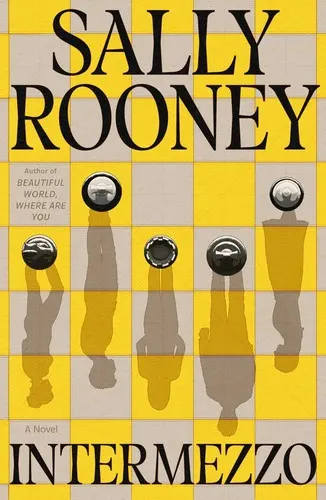
- Intermezzo by Sally Rooney: Rooney’s later novel about two Irish brothers, grief, and love that does not fit neat rules. Intermezzo discussion guide.
- Tomorrow, and Tomorrow, and Tomorrow by Gabrielle Zevin: two friends who keep finding and losing each other over decades. Tomorrow, and Tomorrow, and Tomorrow discussion guide.
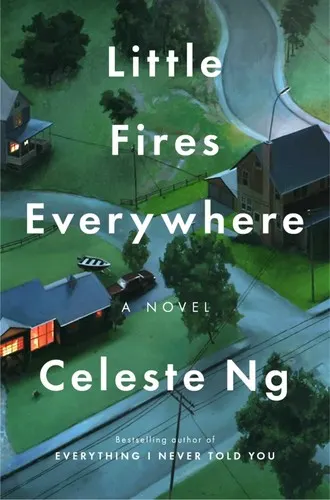
- Little Fires Everywhere by Celeste Ng: a teenage friendship across a class divide, and the families who shape it. Little Fires Everywhere discussion guide.
- Daisy Jones & The Six by Taylor Jenkins Reid: two people who make each other better and worse, and never quite say it. Daisy Jones & The Six discussion guide.
Read Normal People with neighbours in a Mutuals circle. Learn how to run a great reading-circle discussion. Explore more literary fiction picks for book clubs.
About Mutuals
Mutuals matches you with a handful of neighbours whose reading taste overlaps with yours into a local reading circle close to home: monthly meetups, no app fatigue. Free to join. $15 only when we find your circle. If you want to read Normal People with people who live nearby and argue about Connell and Marianne, that is exactly what we do.
Turn the next chapter into a plan
Find a few nearby readers who share your taste. Free to sign up; $15 when you join your matched circle.
Also on the shelf
 Intermezzo
 Tomorrow, and Tomorrow, and Tomorrow
 Little Fires Everywhere
 Daisy Jones & The Six
From the reading bulletin
Original discussion questions by mutuals. Browse all book guides →