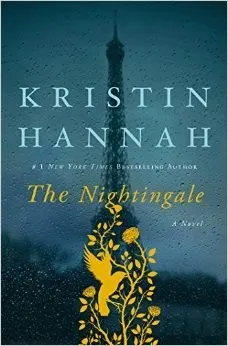
About The Nightingale
Two sisters live through the German occupation of France in very different ways. Vianne Mauriac is the elder. She lives in Carriveau, a village in the Loire Valley, with her young daughter, Sophie. When her husband, Antoine, goes off to fight, she wants only to keep her family safe and wait for him. Then a German officer is billeted in her home. Isabelle Rossignol is eighteen, reckless, and furious at the occupation. She will not keep her head down. She joins the Resistance and, in time, guides downed Allied airmen on foot over the Pyrenees into Spain. The two sisters were raised by a father who came back broken from the First World War, and they have never understood each other. A frame story set in 1995 follows an old woman in Oregon looking back on the war, and Kristin Hannah keeps her name hidden until late in the book. The Nightingale has been a book club favourite for years. It works so well for circles because every reader ends up asking the same question: which sister would I have been?
Discussion questions for The Nightingale
Vianne and Isabelle respond to the occupation in opposite ways at first. Which sister did you relate to more at the start? Did that change by the end?
Vianne wants to keep her head down and protect Sophie. Is that a form of courage, or a way of avoiding it? When does the line between survival and collaboration start to blur for her?
Isabelle is often called reckless by the people around her. How does her impulsiveness help the Resistance, and when does it put others at risk?
Their father, Julien, sent both girls away after their mother died. How did your view of him change over the novel? What does the book say about damage passed down from one war to the next?
Captain Beck, the German officer billeted with Vianne, is polite and sometimes kind. Why do you think Hannah made him a complicated figure rather than a simple villain?
Vianne’s friendship with Rachel, her Jewish neighbour, is tested as the persecution of Jews grows. What did you make of the choices Vianne faced, and the ones she made?
The book gives a lot of space to women’s war: queuing for food, hiding children, keeping a home running under occupation. Did this change the way you think about the Second World War?
Isabelle’s work with the escape line is extremely dangerous. What drives her? Is it patriotism, love, a need to prove herself to her father, or something else?
The 1995 chapters hide the narrator’s name for most of the book. Who did you think she was? How did not knowing change the way you read the war chapters?
Both sisters suffer terrible things at the hands of the occupiers. How does the novel write about trauma and silence? Why might the narrator have kept her story to herself for fifty years?
Hannah has said the book was inspired by real women in the Resistance. How much does it matter to you that a historical novel is rooted in true events?
By the end, what has the war taught each sister about herself that peace never would have? Do you think people only learn who they really are under pressure?
Themes in The Nightingale
Sisters who see each other too late
Vianne and Isabelle spend most of the novel misjudging each other. One thinks the other is a coward. The other thinks her sister is a selfish child. The war forces each of them to see the other’s strength. The book is as much about that slow repair as about the war itself.
Two kinds of courage
Isabelle’s courage is loud: she carries messages, crosses mountains, and defies soldiers to their faces. Vianne’s courage is quiet: feeding her child, hiding others, getting through each day with an enemy in her house. The novel asks readers to honour both, and to question why history has tended to remember only the first.
Women’s war
The men are mostly away, captured, or dead. The women are left to manage hunger, cold, fear, and occupation. Hannah shows the war from the kitchen, the bread queue, and the escape path, and she makes clear how little of this work was recognised afterwards.
Silence and memory
The narrator in 1995 has never told her family what she lived through. The novel explores why survivors keep silent, what that silence costs the next generation, and what happens when the story is finally told.
Main characters in The Nightingale
- Vianne Mauriac: the elder Rossignol sister, a mother and schoolteacher in the village of Carriveau.
- Isabelle Rossignol: Vianne’s younger sister, who joins the Resistance.
- Antoine Mauriac: Vianne’s husband, who goes to war and is taken prisoner.
- Sophie Mauriac: Vianne and Antoine’s daughter.
- Julien Rossignol: the sisters’ father, a First World War veteran who lives in Paris.
- Rachel de Champlain: Vianne’s best friend and neighbour, who is Jewish.
- Ari: Rachel’s young son.
- Captain Wolfgang Beck: the German officer billeted in Vianne’s home.
- Gaëtan: a young man Isabelle meets on the road and falls in love with.
The Nightingale ending explained (spoilers)
This section gives away the ending. Skip it if your club has not finished the book.
Who is the narrator in 1995? The old woman is Vianne. Her son, Julien, does not know her full story. She is invited to a gathering in Paris to honour the Nightingale, and she finally decides to go and to tell him the truth.
What happens to Isabelle? Isabelle, known by the code name “the Nightingale”, is arrested and sent to a concentration camp. Her father tries to save her by claiming that he is the Nightingale, and he is executed. Isabelle survives the camp, but she is very ill. She makes it home to Carriveau, makes peace with Vianne, sees Gaëtan again, and dies soon after.
What does Vianne live through? During the occupation, Vianne kills Captain Beck to protect Isabelle and a hidden airman. Later she is raped by another German officer billeted in her house, and her son Julien is born from that assault. She also hides Jewish children, including Rachel’s son, Ari, by giving them false identities. After the war, Ari is taken to live with his surviving family in America, which breaks Vianne’s heart.
Many clubs end up talking about the last chapters for a long time. Why did Vianne never tell her son? And does her final choice to go to Paris feel like an ending, or a beginning?
Suggested book club format
- Length: About 440 pages, roughly eleven hours of reading.
- Session count: Two sessions work well. Break around the halfway point, once both sisters have committed to their paths. Save the camp chapters and the 1995 reveal for the second meeting.
- Icebreaker: “Is there a story from an older relative’s life that you only learned late, or never fully heard?”
- Moderator note: The book includes rape, the deportation and murder of Jewish people, a concentration camp, executions, starvation, and the death of children. Name these at the start. Some members may have family histories tied to the war, so let people share only what they choose.
How a real club read this
Share how your circle discussed The Nightingale: tell us about your reading circle.
More books like The Nightingale
- The Women by Kristin Hannah: Hannah’s novel of a young army nurse in Vietnam and the women history forgot. The Women discussion guide.
- The Book Thief by Markus Zusak: a girl in wartime Germany, a hidden Jewish man, and the power of words. The Book Thief discussion guide.
- A Gentleman in Moscow by Amor Towles: one man getting through decades of upheaval with grace, from inside a single hotel. A Gentleman in Moscow discussion guide.
- Where the Crawdads Sing by Delia Owens: a woman who survives alone and keeps her secrets for a lifetime. Where the Crawdads Sing discussion guide.
Read The Nightingale with neighbours in a Mutuals circle. Learn how to run a great reading-circle discussion. Explore more historical fiction picks for book clubs.
About Mutuals
Mutuals matches you with a handful of neighbours whose reading taste overlaps with yours into a local reading circle close to home: monthly meetups, no app fatigue. Free to join. $15 only when we find your circle. If you want to read The Nightingale with people who live nearby and talk about which sister you would have been, that is exactly what we do.
Bring The Nightingale to a Mutuals reading circle near you →
Turn the next chapter into a plan
Find a few nearby readers who share your taste. Free to sign up; $15 when you join your matched circle.
Also on the shelf
 The Women
 The Book Thief
 A Gentleman in Moscow
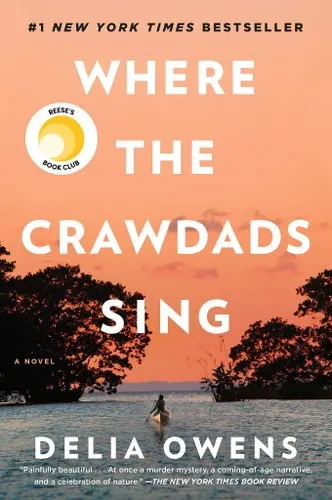 Where the Crawdads Sing
From the reading bulletin
Original discussion questions by mutuals. Browse all book guides →