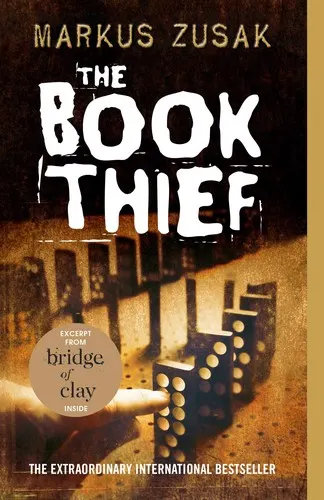
About The Book Thief
The narrator of this novel is Death. He is tired, busy, and oddly tender, and he tells us early on that he has met one girl three times. Her name is Liesel Meminger. In 1939, Liesel is taken to live with foster parents on Himmel Street in Molching, a small town near Munich. Her little brother dies on the journey there, and at his graveside she picks up a book that someone has dropped. She cannot read it yet. Her foster father, Hans Hubermann, a gentle house painter who plays the accordion, teaches her at night in the basement. Her foster mother, Rosa, swears at everyone and loves them fiercely. Next door is Rudy Steiner, a boy with lemon-coloured hair who wants a kiss from her. Then a young Jewish man named Max Vandenburg knocks on the Hubermanns’ door, and the family takes a terrible risk to hide him. Markus Zusak’s novel was published for both adults and younger readers, and it is still one of the most loved novels about the Second World War. It works for book clubs because it gives a lot to talk about: the strange narrator, the power of words, and ordinary Germans who chose kindness at great cost.
Discussion questions for The Book Thief
Death is the narrator, and he is not the figure most of us imagine. How did you feel about him as a storyteller? Did his voice make the story easier or harder to bear?
Death often tells us what will happen before it happens. Why do you think Zusak gives away so much in advance? Did knowing an outcome change how you felt when you reached it?
Liesel steals books, but she does not steal them for money. What does each stolen book mean to her at that moment in her life?
Hans teaches Liesel to read in the basement, painting words on the walls. Why do you think learning to read means so much to her? Who taught you to love reading?
Rosa Hubermann seems harsh at first. When did your view of her change? What does the novel say about people whose love does not look like love on the surface?
Max and Liesel bond over nightmares and words. What does each of them give the other? Why do you think their friendship is so central to the book?
Max paints over the pages of a Nazi book and writes his own story on top. What do you make of that act? Where else in the novel are words used both to harm and to heal?
Rudy is funny, stubborn, and brave. What did his story add to the book, and what does it say about the boys of his generation?
Ilsa Hermann, the mayor’s wife, leaves her library window open for Liesel. Why do you think she does this? What is she grieving?
Several characters make small, risky acts of kindness in a dangerous time. Which one stayed with you most? What would it have cost them if they had been caught?
The novel shows ordinary Germans living under the Nazis: some enthusiastic, some afraid, some quietly resisting. How did that view of the war compare with other books or films you know?
The book was published for both adults and younger readers. Who do you think it is really for? Would you give it to a teenager?
Themes in The Book Thief
The power of words
Words are everywhere in this novel. Hitler’s speeches stir up hatred. Liesel’s stolen books give her comfort and courage. Max writes his own stories over a Nazi book. Liesel reads aloud in the air raid shelter to calm her neighbours. Zusak asks readers to see that words can destroy people and can also save them.
Death as witness
Death is not cruel in this book. He is overworked, haunted by what humans do to each other, and drawn to the colours of the sky. Having him narrate makes the scale of the war feel personal. It also lets the novel be honest about loss without being cold.
Family by choice
Liesel loses her mother and brother early. The Hubermanns are not her real parents, and Max is not her brother, but they become her family. Rudy is her best friend. The book is about how love grows between people who had no plan to love each other.
Small acts of courage
There are no great heroes in Molching. There are people who hide a man in the basement, give bread to a stranger, or leave a window open. The novel shows how risky even the smallest kindness was, and how much it mattered.
Main characters in The Book Thief
- Liesel Meminger: a young girl sent to live with foster parents in Molching, who learns to read and steals books.
- Death: the narrator of the novel.
- Hans Hubermann: Liesel’s foster father, a house painter and accordion player.
- Rosa Hubermann: Liesel’s foster mother, who takes in washing and has a sharp tongue.
- Rudy Steiner: Liesel’s best friend and neighbour on Himmel Street.
- Max Vandenburg: a young Jewish man whom the Hubermanns hide in their basement. His father saved Hans’s life in the First World War.
- Ilsa Hermann: the mayor’s wife, who lets Liesel into her library.
The Book Thief ending explained (spoilers)
This section gives away the ending. Skip it if your club has not finished the book.
Who dies at the end of The Book Thief? An air raid destroys Himmel Street. Hans, Rosa, and Rudy are all killed, along with most of their neighbours. Liesel survives only because she is in the basement at night, writing her own story in a book Ilsa Hermann gave her. She finds Rudy’s body in the rubble and finally kisses him. She leaves her book behind, and Death picks it up.
What happens to Max? Max is taken to a concentration camp, and at one point Liesel sees him marched through Molching with other prisoners. He survives. After the war, he comes back to find Liesel, and they are reunited.
What happens to Liesel? After the bombing, Liesel lives with Ilsa Hermann for a time. Death tells us she later lives a long life in Sydney, Australia, with a family of her own. When she dies as an old woman, Death comes for her and gives her back the book she wrote. That book is called The Book Thief.
Clubs often talk about why Death tells us so early that Rudy will die. Did knowing make the ending less painful, or more?
Suggested book club format
- Length: About 550 pages, roughly twelve hours of reading.
- Session count: Two sessions work well. A good break comes after Max arrives and settles in the basement. Save the final parts for the second meeting.
- Icebreaker: “What is a book you remember reading, or being read to you, that you have never forgotten?”
- Moderator note: The novel covers the Holocaust, the persecution of Jewish people, war deaths, child deaths, and a bombing that kills most of the characters we love. It is not graphic, but it is very sad. Some members may have family histories tied to the war. Let people share only what they choose.
How a real club read this
Share how your circle discussed The Book Thief: tell us about your reading circle.
More books like The Book Thief
- The Nightingale by Kristin Hannah: two sisters in occupied France, and the quiet courage of ordinary women in wartime. The Nightingale discussion guide.
- To Kill a Mockingbird by Harper Lee: a child’s view of injustice, and a father who teaches by example. To Kill a Mockingbird discussion guide.
- The Kite Runner by Khaled Hosseini: a childhood friendship, a country torn apart by war, and a debt that lasts a lifetime. The Kite Runner discussion guide.
- A Gentleman in Moscow by Amor Towles: one man, one building, and the books and friendships that carry him through decades of upheaval. A Gentleman in Moscow discussion guide.
Read The Book Thief with neighbours in a Mutuals circle. Learn how to run a great reading-circle discussion. Explore more historical fiction picks for book clubs.
About Mutuals
Mutuals matches you with a handful of neighbours whose reading taste overlaps with yours into a local reading circle close to home: monthly meetups, no app fatigue. Free to join. $15 only when we find your circle. If you want to read The Book Thief with people who live nearby, that is exactly what we do.
Turn the next chapter into a plan
Find a few nearby readers who share your taste. Free to sign up; $15 when you join your matched circle.
Also on the shelf
 The Nightingale
 To Kill a Mockingbird
 The Kite Runner
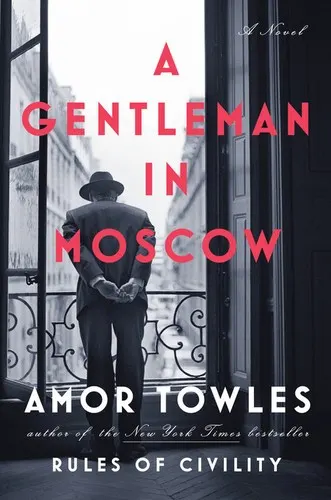 A Gentleman in Moscow
From the reading bulletin
Original discussion questions by mutuals. Browse all book guides →