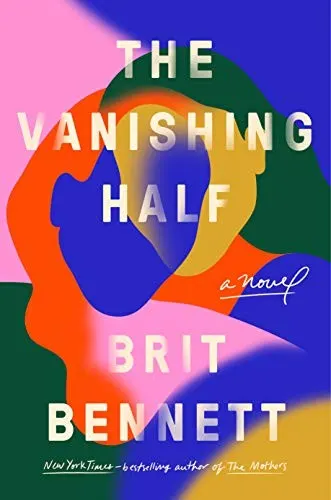
About The Vanishing Half
Desiree and Stella Vignes are identical twins from Mallard, Louisiana, a small town of light-skinned Black families who prize lightness above almost everything. As girls, they saw their father killed by white men. At sixteen, they run away together to New Orleans. A few years later, Stella vanishes from her sister’s life and begins living as a white woman. She marries a white man, moves to Los Angeles, and tells no one where she came from. Desiree goes the other way. She marries a dark-skinned man, leaves him, and returns to Mallard with her daughter, Jude, whose dark skin makes her an outsider in the town. Brit Bennett follows the twins and their daughters from the 1950s to the 1990s, and the two families’ paths begin to cross again. The novel is about race, but also about every kind of reinvention: who we decide to be, and what that choice costs the people we leave behind. Clubs find it moving, readable, and full of questions with no simple answers.
Discussion questions for The Vanishing Half
Mallard was founded around the idea of lightness. How does the town’s own colourism shape Desiree, Stella, and later Jude?
The twins witness their father’s murder as children. How does that memory follow each of them? Do you think it explains Stella’s choice?
Stella’s decision to live as white begins almost by accident. When did it become a choice, and when did it become a trap?
Stella builds a comfortable life in Los Angeles, but she is never at ease. What does passing give her, and what does it take away?
When a Black family moves into Stella’s all-white neighbourhood, she reacts in ways that surprised many readers. How did you understand her behaviour toward her new neighbour?
Desiree returns to Mallard, the place she most wanted to escape. Why does she go back? What does home mean to her by the end of the book?
Jude grows up being mocked in Mallard for her dark skin. How does that shape the person she becomes in Los Angeles?
Reese has also left an old self behind to become who he is. How does his story mirror and differ from Stella’s?
Kennedy grows up never knowing her mother’s past. How did you feel about her? Is she a victim of Stella’s secret, or does she have her own kind of freedom?
Early Jones spends his life finding people who do not want to be found. Why do you think Bennett gave him that job? What do Early and Desiree give each other?
The book moves between decades and between characters. Which point of view did you most look forward to, and why?
The title suggests that something is always missing. Who or what do you think “the vanishing half” refers to?
Themes in The Vanishing Half
Passing and reinvention
Stella’s choice to pass as white is the centre of the book, but it is not the only reinvention. Reese becomes himself after leaving home. Kennedy acts for a living. Jude leaves Mallard behind. Bennett treats changing your identity as something people do for safety, freedom, love, and ambition, and she shows what each version costs.
Colourism and belonging
Mallard’s prejudice against darker skin is as cruel to Jude as the white world is to everyone in the book. The novel does not let any community off the hook. It shows how people who suffer from racism can also build their own hierarchies, and how a child can grow up feeling she does not belong anywhere.
Sisters and the life not lived
Desiree and Stella were once inseparable. After they split, each one lives the life the other might have had. Their absence from each other runs through the whole novel, and much of its sadness comes from the years they lose.
Mothers and the secrets they keep
Both twins hide parts of their past from their daughters. Jude and Kennedy have to piece together their mothers’ histories on their own. The book asks what children are owed about where they come from, and whether a parent’s secret can ever only belong to the parent.
Main characters in The Vanishing Half
- Desiree Vignes: one of the twins. She leaves Mallard, marries, and returns years later with her daughter.
- Stella Vignes: Desiree’s twin. She disappears and builds a life as a white woman in Los Angeles.
- Jude Winston: Desiree’s daughter, whose dark skin sets her apart in Mallard. She later moves to Los Angeles.
- Kennedy Sanders: Stella’s daughter, raised as white, who becomes an actress.
- Blake Sanders: Stella’s white husband, who does not know about her past.
- Reese Carter: a young man Jude meets in Los Angeles, who has also left his old life behind.
- Early Jones: a man who tracks down people for a living, and who becomes part of Desiree’s life.
- Adele Vignes: the twins’ mother, who stays in Mallard.
The Vanishing Half ending explained (spoilers)
This section gives away the ending. Skip it if your club has not finished the book.
Jude meets Stella by chance in Los Angeles and recognises her, because she looks exactly like Desiree. Jude later befriends Kennedy and eventually tells her the truth about her mother’s family. Stella refuses to confirm it, and the relationship between mother and daughter is strained.
Stella does return to Mallard, briefly, and sees her sister and her mother again. But she cannot stay. She goes back to her life as a white woman, and her husband never learns the truth. The twins have found each other again, but they cannot become what they once were.
Clubs often discuss whether Stella’s choice was freedom or self-betrayal, and whether she could ever have gone back. Many readers also argue about whether Kennedy and Jude, the next generation, are any freer than their mothers.
Suggested book club format
- Length: About 340 pages, roughly nine hours of reading.
- Session count: One session suits most circles. For two, break at the point where the story moves to the daughters’ generation, so the second meeting can focus on Jude, Kennedy, and the ending.
- Icebreaker: “Have you ever reinvented yourself, even a little, when you moved somewhere new?”
- Moderator note: The novel includes racist violence, a lynching recalled from childhood, domestic abuse, and dementia. It also handles race and identity directly. Give members room to speak from their own experience, and make clear no one has to.
How a real club read this
Share how your circle discussed The Vanishing Half: tell us about your reading circle.
More books like The Vanishing Half
- Little Fires Everywhere by Celeste Ng: mothers, daughters, and secrets in a suburb that believes it has moved past prejudice. Little Fires Everywhere discussion guide.
- The Seven Husbands of Evelyn Hugo by Taylor Jenkins Reid: a woman who hides her heritage to become a star, and the price she pays. The Seven Husbands of Evelyn Hugo discussion guide.
- Pachinko by Min Jin Lee: four generations of one family making hard choices in a country that will never accept them. Pachinko discussion guide.
- James by Percival Everett: a man who knows that the face he shows white people is a performance, and what it costs him. James discussion guide.
Read The Vanishing Half with neighbours in a Mutuals circle. Learn how to run a great reading-circle discussion. Explore more literary fiction picks for book clubs.
About Mutuals
Mutuals matches you with a handful of neighbours whose reading taste overlaps with yours into a local reading circle close to home: monthly meetups, no app fatigue. Free to join. $15 only when we find your circle. If you want to read The Vanishing Half with people who live nearby, that is exactly what we do.
Bring The Vanishing Half to a Mutuals reading circle near you →
Turn the next chapter into a plan
Find a few nearby readers who share your taste. Free to sign up; $15 when you join your matched circle.
Also on the shelf
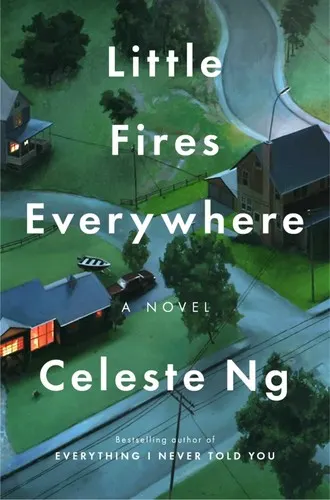 Little Fires Everywhere
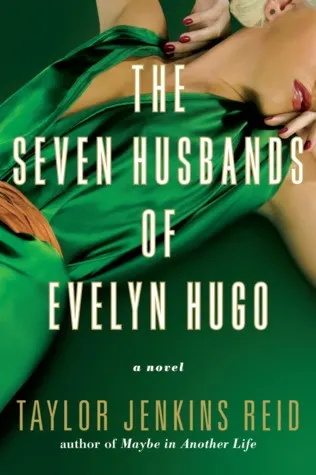 The Seven Husbands of Evelyn Hugo
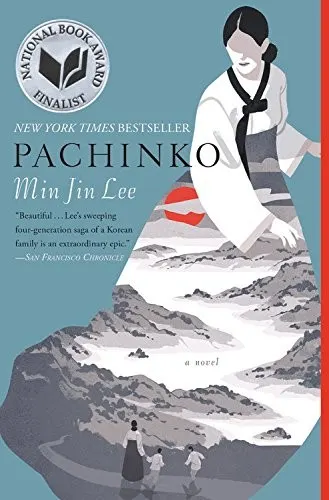 Pachinko
 James
From the reading bulletin
Original discussion questions by mutuals. Browse all book guides →