Pachinko Discussion Questions & Book Club Guide
by Min Jin Lee
Want to read Pachinko with a few people nearby?
About Pachinko
In a fishing village on the southern coast of Korea in 1911, a club-footed fisherman’s daughter named Sunja becomes pregnant by a wealthy married man. Her refusal to become his mistress sets off a chain of decisions that carries four generations of one family from colonial Korea into the hostile margins of twentieth-century Japan. Min Jin Lee’s 2017 novel tracks the Baek family across nearly eight decades of war, displacement, and reinvention — through black markets in Osaka, pachinko parlours in Yokohama, and the quiet compromises people make when the country they live in will never call them citizens. It is sweeping without being sentimental, and it will give your book club more to argue about than almost any novel published this decade.
Discussion questions for Pachinko
Sunja’s decision to marry Isak instead of accepting Hansu’s arrangement reshapes the entire family line. Was it a moral choice, a practical one, or an act of self-preservation — and does the distinction matter?
Isak and Hansu offer Sunja two fundamentally different models of survival. Which man understood the world more clearly, and which one do you think Sunja loved?
The novel opens with “History has failed us, but no matter.” How does that sentence land differently after you’ve finished the book than when you first read it?
Noa spends his adult life trying to erase his Korean identity. At what point did you sense his assimilation project was going to destroy him, and do you think Lee frames it as a tragedy or an inevitability?
Mozasu builds his life in the pachinko industry — a business built on chance and run largely by ethnic Koreans in Japan. What does Lee seem to be saying about who gets to participate in a country’s economy versus its identity?
Solomon is the most assimilated generation and arguably the most isolated. How does his arc comment on whether proximity to acceptance is the same thing as belonging?
The women in this novel — Yangjin, Sunja, Kyunghee, Etsuko, Hana — hold the family together through labour that is almost never acknowledged. Which woman’s sacrifice struck you as the most costly, and why?
Hansu reappears across decades as both protector and manipulator. Did your opinion of him change over the course of the novel, or did Lee keep him deliberately unresolvable?
The pachinko machine itself appears surprisingly late in the book. What does Lee gain by withholding the title’s central metaphor — and once it arrives, how does it reframe what you’ve already read?
Lee shifts point of view across four generations without a single first-person narrator. How does that distance shape your emotional relationship with the family compared to a novel told from one character’s perspective?
Several characters convert to Christianity, but the faith functions differently for each of them. Where in the novel does religion operate as genuine belief, and where does it operate as strategy?
The final image of the book is Solomon standing among gravestones. Is that ending an act of mourning, of reclamation, or of something else entirely?
Which generation’s story hit you hardest — and is that because of the characters themselves or because of what their era demanded of them?
Themes in Pachinko
Belonging and the impossibility of home
The Baek family lives in Japan for decades, speaks the language, pays taxes, and buries their dead there — yet they are never considered Japanese. Lee builds a case that belonging is not something you earn through effort or time but something a nation either grants or withholds. For the family, Korea becomes an abstraction and Japan remains a locked door, leaving them perpetually in between.
Sacrifice across generations
Every generation in the novel inherits the cost of the previous generation’s choices. Sunja’s refusal of Hansu protects her honour but consigns her sons to poverty. Noa’s education lifts his prospects but severs him from his family. Lee treats sacrifice not as noble in itself but as a currency whose value the person paying almost never gets to set.
The weight of ethnic identity in a hostile nation
Korean-Japanese characters in the novel must register as aliens, carry identification cards, and accept that certain professions and neighbourhoods are closed to them. Lee doesn’t editorialize these details — she simply stacks them until the structural violence becomes undeniable. The cumulative effect is more persuasive than any single dramatic scene.
Women’s invisible labour
Yangjin’s boarding house, Sunja’s kimchi stall, Kyunghee’s cooking — the family survives because the women work without rest and without recognition. Lee gives these tasks the same narrative weight as the men’s more public struggles, quietly insisting that the economy that sustains a family is not the one anyone writes history about.
Chance versus choice — the pachinko metaphor
A pachinko ball drops through a field of pins and lands where physics sends it. Lee uses the machine as a figure for lives shaped by forces beyond individual will — colonialism, poverty, racism, gender. But characters still make choices within those constraints, and the novel’s tension lives in the gap between what you can control and what was decided before you were born.
Suggested book club format
- Length: 490 pages, roughly ten to twelve hours of reading.
- Session count: Three sessions work best — one per generational arc. Session one through Part I (Sunja and Isak in Korea and early Osaka), session two through Part II (the war years and Noa and Mozasu coming of age), session three to the end (Solomon’s generation and the reckoning). This pacing prevents the common problem of the group finishing the first generation and rushing the rest.
- Icebreaker: “What’s one story about your family’s past that you only learned as an adult — and did knowing it change how you see yourself?”
- Moderator note: The novel depicts wartime sexual violence, systemic ethnic discrimination, and suicide. Flag these at the start of your first session and check in before the section covering Noa’s storyline. The tone is measured rather than graphic, but the weight accumulates.
How a real club read this
Share how your club discussed Pachinko — tell us about your reading circle.
More books like Pachinko
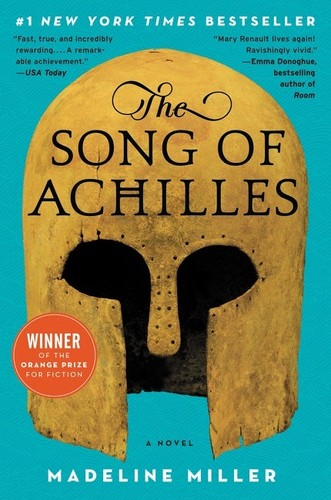
- The Song of Achilles by Madeline Miller — love, fate, and the cost of glory retold through the most intimate voice in Greek myth. The Song of Achilles discussion guide.
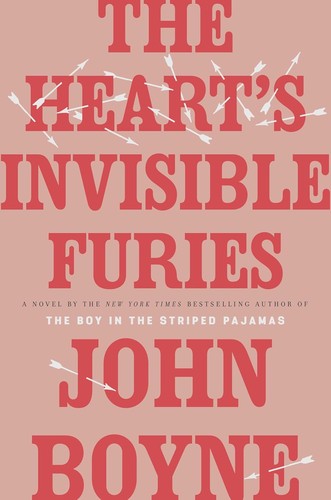
- The Heart’s Invisible Furies by John Boyne — one man’s life across six decades of Ireland, where being yourself is the most dangerous thing you can do. The Heart’s Invisible Furies discussion guide.
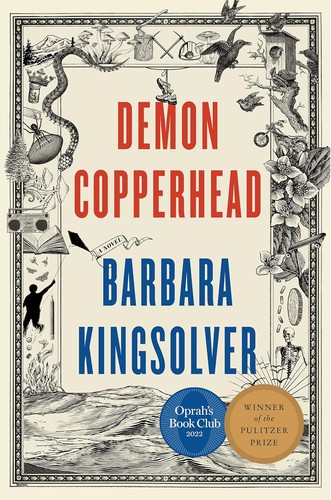
- Demon Copperhead by Barbara Kingsolver — a Dickensian saga of poverty, addiction, and survival in Appalachia that earns every one of its pages. Demon Copperhead discussion guide.
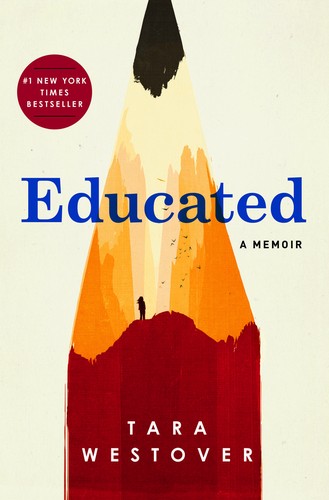
- Educated by Tara Westover — a memoir about escaping a survivalist family and discovering that education can be both liberation and loss. Educated discussion guide.
Read Pachinko with neighbours in a Mutuals circle. Learn how to run a great reading-circle discussion. Explore more literary fiction picks for book clubs.
About Mutuals
Mutuals matches you with a handful of neighbours whose reading taste overlaps with yours into a local reading circle close to home: monthly meetups, no app fatigue. Free to sign up; you only pay $15 if a circle actually forms around you. If you want to read Pachinko with people who live nearby, that’s literally what we do.
Imagine reading Pachinko with a handful of neighbours who love it too. mutuals matches you with local readers who share your taste. Free to join, and just $15 on the day your circle forms.
Match with neighboursMore guides like this
From the blog
Discussion guide by the mutuals team. Questions are original.
More book guides