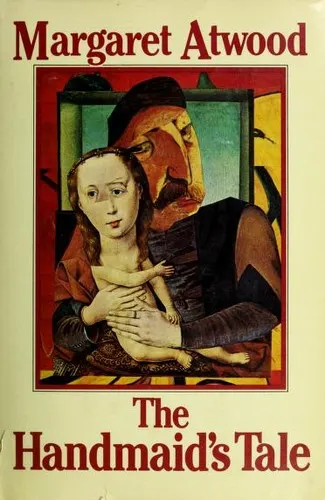
About The Handmaid’s Tale
The United States is gone. In its place is the Republic of Gilead, a theocracy where women are forbidden to read, work, or own property, and where most people can no longer have children. Fertile women are made Handmaids. They are assigned to powerful Commanders and their Wives, and their only job is to bear children for them. The narrator is one of these women. In Gilead she is called Offred, a name that marks her as the property of her Commander, and we never learn her real name for certain. She lives in his house, wears red, walks to the shops in pairs, and remembers. She remembers her husband, Luke, her young daughter, her outspoken friend Moira, and her mother. She remembers a time, only a few years earlier, when she had a job and a bank account. Margaret Atwood published the novel in 1985, and it has never stopped feeling current. The TV series brought it a new audience, and Atwood returned to Gilead in The Testaments in 2019. It works for book clubs because almost every detail invites the question: could this happen, and how would we notice?
Discussion questions for The Handmaid’s Tale
Offred tells her story out of order, moving between her present in Gilead and her memories of life before. How does that structure affect the way you experience the book?
Gilead did not appear overnight. From Offred’s memories, what were the early steps? Which ones surprised you, and which felt familiar?
Offred is not a hero in the usual sense. She is often passive, frightened, and careful. Did you judge her for that? What would you have done in her place?
Moira escapes, resists, and refuses to be broken, at least for a while. Why do you think Atwood gives Offred a friend like Moira? What happens to your hope when you learn where Moira ends up?
Serena Joy once campaigned for women to stay in the home. Now she lives in the world she asked for. How did you feel about her? Is she a victim, a villain, or both?
The Commander invites Offred to play Scrabble and read magazines in secret. Why are these small, forbidden things so powerful? What does he want from her?
Language is controlled in Gilead: new names, new greetings, banned words. How does Atwood show the link between words and power?
The Aunts, led by Aunt Lydia, train the Handmaids. Why does the regime use women to control other women? Where else have you seen this pattern?
Offred’s relationship with Nick is a risk she chooses. Is it an act of resistance, of comfort, or of survival?
Atwood has said she included nothing in the novel that people had not already done somewhere in history. Does knowing that change how you read it?
The final chapter ends in uncertainty. What did you believe happened to Offred when you closed the book?
The “Historical Notes” at the end are set long after Gilead, at an academic conference. Why do you think Atwood added them? How did they change your feelings about Offred’s story?
Themes in The Handmaid’s Tale
Control of women’s bodies
Gilead turns fertility into state property. Handmaids are valued only as wombs, Wives as status, and Marthas as labour. The novel shows how a government can take control of women’s bodies through law, religion, and fear, and how quickly that control can feel normal.
Complicity and the slow slide
Offred keeps asking how she missed the signs. The novel is less about a sudden coup than about all the ways ordinary people went along, looked away, or felt safe until they were not. Many clubs find this the most uncomfortable part of the book.
Memory as resistance
Offred cannot change Gilead, but she can remember. Her memories of Luke, her daughter, Moira, and her mother are something the regime cannot fully take. Telling her story becomes its own act of defiance.
Language and power
Gilead renames people, controls greetings, bans reading, and rewrites scripture to suit itself. Atwood shows that whoever controls words controls what people can think. The Scrabble games become one of the most charged scenes in the book for exactly that reason.
Main characters in The Handmaid’s Tale
- Offred: the narrator, a Handmaid assigned to the Commander’s household. Her real name is never confirmed.
- The Commander: a high-ranking official in Gilead, and Offred’s assigned master.
- Serena Joy: the Commander’s Wife, a former television singer and speaker for traditional values.
- Nick: the Commander’s driver, with whom Offred begins a secret relationship.
- Moira: Offred’s best friend from before Gilead, bold and rebellious.
- Luke: Offred’s husband in her former life.
- Aunt Lydia: one of the Aunts who train and discipline the Handmaids.
- Ofglen: Offred’s shopping partner, who turns out to be part of a resistance network.
- Janine: a Handmaid who trained with Offred, later known as Ofwarren.
- Rita and Cora: the Marthas, the household servants.
The Handmaid’s Tale ending explained (spoilers)
This section gives away the ending. Skip it if your club has not finished the book.
What happens to Offred? A black van arrives at the Commander’s house. Nick tells Offred that the men are from Mayday, the resistance, and that she should trust him and go with them. Offred does not know if this is true or if she is being arrested. She steps into the van, and her story ends there. Atwood never confirms which it was.
What are the Historical Notes? The epilogue is a transcript of an academic symposium held in 2195, long after Gilead has fallen. A professor explains that Offred’s account was found recorded on cassette tapes. The scholars debate who the Commander might have been and joke about the material. They cannot say what happened to her.
Why does it matter? The Notes tell us Gilead did end. They also show the narrator’s suffering turned into a puzzle for experts, discussed with polite laughter. Clubs often argue about whether the ending is hopeful, since she lived long enough to record her story, or bleak, since even the future does not quite listen.
Suggested book club format
- Length: About 310 pages, roughly seven hours of reading.
- Session count: One session, or two if your club wants to compare the book with the TV series. A natural break comes after Offred’s first secret meeting with the Commander.
- Icebreaker: “Which small freedom in your ordinary week would you miss most if it were taken away?”
- Moderator note: The novel includes ritualised rape, violence against women, executions, suicide, and religious extremism. Discussions can turn quickly to current politics. Agree at the start how your club wants to handle that, so everyone feels able to speak.
How a real club read this
Share how your circle discussed The Handmaid’s Tale: tell us about your reading circle.
More books like The Handmaid’s Tale
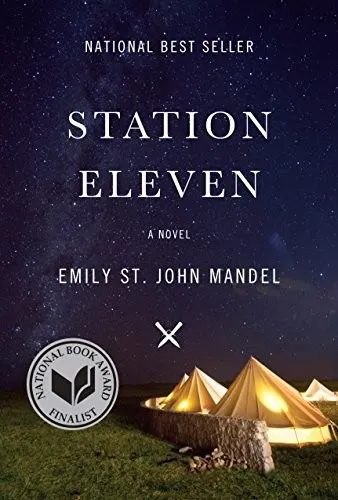
- Station Eleven by Emily St. John Mandel: another story of a world that changed fast, told through memory and the things people choose to keep. Station Eleven discussion guide.
- Klara and the Sun by Kazuo Ishiguro: a quiet near future where a system decides who gets ahead, seen through a narrator who notices everything. Klara and the Sun discussion guide.
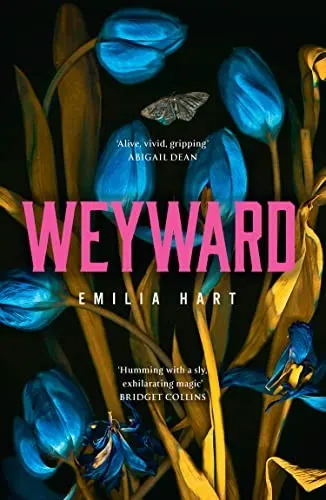
- Weyward by Emilia Hart: three women across centuries, punished for living outside the rules men set for them. Weyward discussion guide.
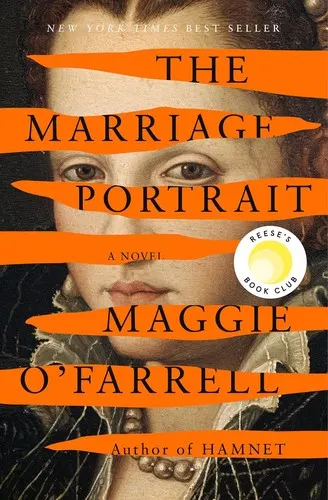
- The Marriage Portrait by Maggie O’Farrell: a young woman whose body and future belong to a powerful man, and who refuses to disappear. The Marriage Portrait discussion guide.
Read The Handmaid’s Tale with neighbours in a Mutuals circle. Learn how to run a great reading-circle discussion. Explore more speculative fiction picks for book clubs.
About Mutuals
Mutuals matches you with a handful of neighbours whose reading taste overlaps with yours into a local reading circle close to home: monthly meetups, no app fatigue. Free to join. $15 only when we find your circle. If you want to read The Handmaid’s Tale with people who live nearby and talk through the questions it raises, that is exactly what we do.
Bring The Handmaid’s Tale to a Mutuals reading circle near you →
Turn the next chapter into a plan
Find a few nearby readers who share your taste. Free to sign up; $15 when you join your matched circle.
Also on the shelf
 Station Eleven
 Klara and the Sun
 Weyward
 The Marriage Portrait
From the reading bulletin
Original discussion questions by mutuals. Browse all book guides →