The Marriage Portrait Discussion Questions & Book Club Guide
by Maggie O'Farrell
Want to read The Marriage Portrait with a few people nearby?
About The Marriage Portrait
Lucrezia de’ Medici is fifteen when she marries Alfonso d’Este, Duke of Ferrara. She is the third daughter, the overlooked one, the artist. He is powerful, charming, and — she comes to realize — planning to kill her. Maggie O’Farrell’s 2022 novel reimagines the real Lucrezia, who died at sixteen under suspicious circumstances, as a young woman with a wild inner life trapped inside a political marriage. The story is based on the same historical figure that inspired Browning’s “My Last Duchess.” O’Farrell alternates between Lucrezia’s girlhood in the Medici household and the night she understands what her husband intends, building a slow-burn survival thriller dressed as Renaissance portraiture. Book clubs fight over this one because the suspense is almost unbearable, and the conversation about what marriage meant — and still means — as a structure of ownership tends to go long.
Discussion questions for The Marriage Portrait
Lucrezia paints and draws throughout the novel, often in secret or in stolen moments. Is her art an act of resistance, a coping mechanism, or the truest expression of a self the world has no use for — and does the distinction matter?
Alfonso is charming before the wedding and terrifying after it. At what point did you first sense that the charm was a form of control, and did O’Farrell give you that realization at the same time as Lucrezia?
The novel alternates between Lucrezia’s childhood in Florence and the night at the hunting lodge. How does the dual timeline shape the suspense? Did knowing what was coming make the early chapters more tender or more painful?
O’Farrell chose to give voice to a historical footnote — a girl who appears mostly as a date of death in the historical record. What does the novel argue about whose stories are worth telling, and what is gained by imagining a rich inner life for someone history barely noticed?
The caged tiger at the Medici court appears early and returns as a metaphor throughout. What does the tiger represent for Lucrezia, and how does its meaning shift by the end of the book?
The Medici family treats Lucrezia’s marriage as a diplomatic transaction. Her sisters are currency, and she is the coin that wasn’t supposed to be spent. How does the novel portray the family’s complicity — with sympathy, with anger, or with something colder?
O’Farrell describes art-making in intensely physical terms: pigments, textures, the pressure of a hand on a surface. What does the novel gain by grounding creativity in the body, especially for a character whose body is increasingly not her own?
Alfonso commissions a portrait of Lucrezia. In Browning’s poem, “My Last Duchess,” the Duke keeps his wife’s portrait behind a curtain he controls. How does O’Farrell use the act of being painted — and the difference between how Lucrezia sees herself and how she is rendered?
The servants and attendants around Lucrezia range from loyal to complicit to indifferent. Did any secondary character change how you understood the main story, and what does the novel say about the people who witness cruelty without intervening?
O’Farrell writes about the Renaissance court with sensory precision — food, fabric, the smell of rooms, the weight of clothing. Does the historical detail immerse you in Lucrezia’s world or create distance from it?
The ending arrives quickly after a long, slow build. Did it satisfy you? Did Lucrezia earn her outcome, or did O’Farrell make a choice about what this particular story needed that you might have made differently?
If you’ve read Browning’s “My Last Duchess,” how did the poem’s version of this marriage sit alongside O’Farrell’s? Does the novel read as a correction, a companion, or an argument with the poem?
Themes in The Marriage Portrait
Art as the self the world can’t reach
Lucrezia’s painting is not a hobby or an ornament — it is the part of her that remains ungovernable. In a life where her body, movements, and future belong to other people, the act of making something is the one domain where she exercises genuine authority. O’Farrell treats art not as escape but as evidence of an inner life that the political machinery around Lucrezia cannot access or extinguish, no matter how thoroughly it controls everything else.
Marriage as contract and cage
The wedding is a merger between two powerful families, and Lucrezia’s consent is assumed rather than asked for. O’Farrell doesn’t soften the transactional nature of Renaissance marriage — she leans into it, showing how the ceremony that is supposed to elevate Lucrezia actually transfers her from one form of ownership to another. The novel’s horror comes from the realization that the cage was always the point, and the charm was just the lock.
The danger of being seen clearly
Lucrezia is most at risk when Alfonso perceives her accurately — as intelligent, as wilful, as someone who might not be as controllable as he assumed. The novel reverses the usual logic of visibility: being noticed, being understood, being truly seen by a powerful man is not romantic but lethal. O’Farrell builds an entire thriller around the idea that a woman’s survival depends on not being fully known.
Women as political currency
Every daughter in the Medici household exists in relation to her marriage value. Lucrezia was not the intended bride — her older sister was — and that accident of substitution haunts the entire novel. O’Farrell shows how families that love their daughters can still spend them like coins, and how the system that treats women as instruments of alliance produces the conditions for intimate violence.
Suggested book club format
- Length: 352 pages, roughly seven to eight hours of reading.
- Session count: One session works well. The dual timeline converges naturally, and the suspense benefits from being discussed whole rather than interrupted. If your group prefers a split, break when Lucrezia arrives in Ferrara — the shift from the Medici household to the Este court marks a clear tonal change.
- Icebreaker: “Have you ever walked into a situation that everyone assured you was fine and felt, immediately, that it was not? What tipped you off?”
- Moderator note: The novel deals with marital threat and coercive control, near-poisoning, and the death of a child is mentioned. The violence is atmospheric rather than graphic — O’Farrell builds dread more than she depicts harm — but flag these elements before discussion begins so no one is caught off guard.
How a real club read this
Share how your club discussed The Marriage Portrait — tell us about your reading circle.
More books like The Marriage Portrait
- Lessons in Chemistry by Bonnie Garmus — a woman whose intelligence is treated as a problem by every institution around her, told with fury and dark comedy where O’Farrell uses dread and beauty. Lessons in Chemistry discussion guide.
- Weyward by Emilia Hart — three women across three centuries, each surviving men who treat female independence as witchcraft, with the same atmospheric unease and slow-gathering defiance. Weyward discussion guide.
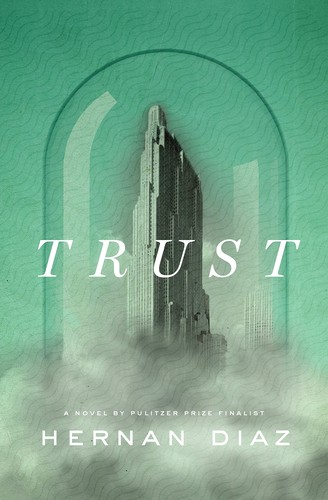
- Trust by Hernan Diaz — a wife rewritten by every man who tells her story, and the question of who gets to control the narrative of a marriage. Trust discussion guide.
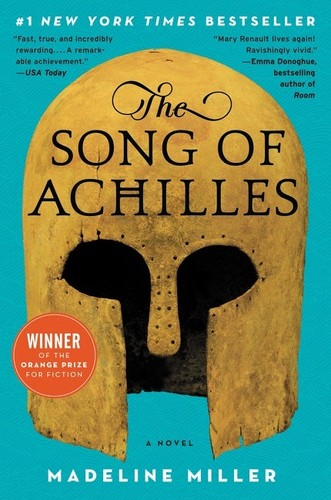
- The Song of Achilles by Madeline Miller — a life retold from the perspective of the person history overlooked, with the same commitment to giving interior depth to a figure the record reduced to a footnote. The Song of Achilles discussion guide.
Read The Marriage Portrait with neighbours in a Mutuals circle. Learn how to run a great reading-circle discussion. Explore more historical fiction picks for book clubs.
About Mutuals
Mutuals matches you with a handful of neighbours whose reading taste overlaps with yours into a local reading circle close to home: monthly meetups, no app fatigue. Free to sign up; you only pay $15 if a circle actually forms around you. If you want to read The Marriage Portrait with people who live nearby and argue about whether the ending was mercy or escape, that’s exactly what we built for.
Bring The Marriage Portrait to a Mutuals reading circle near you →
Imagine reading The Marriage Portrait with a handful of neighbours who love it too. mutuals matches you with local readers who share your taste. Free to join, and just $15 on the day your circle forms.
Match with neighboursMore guides like this


From the blog
Discussion guide by the mutuals team. Questions are original.
More book guides