Weyward Discussion Questions & Book Club Guide
by Emilia Hart
Want to read Weyward with a few people nearby?
About Weyward
Three women across three timelines — 1619, 1942, 2019 — connected by a crumbling cottage in the English countryside and an affinity for the natural world that other people keep calling witchcraft. In the present day, Kate flees an abusive partner and arrives at a cottage she’s inherited from a great-aunt she never knew. In wartime, teenage Violet is sent to live with her eccentric cousin and discovers the family history her father tried to bury. In the Jacobean period, Altha stands trial for the murder of a local man, with the village ready to call her a witch. Emilia Hart’s 2023 debut braids domestic horror with ecological wonder, and the result is atmospheric enough to discuss over candles and sharp enough to start a real conversation about how little has changed for women living under the control of dangerous men.
Discussion questions for Weyward
The novel moves between 1619, 1942, and 2019. Which timeline pulled you in most, and which felt like the one the book itself cared about most? Are those the same?
Each woman has a relationship with the natural world that her community finds threatening. What exactly is being threatened — the men around them, the social order, or something less nameable?
Altha’s trial follows the logic of real seventeenth-century witch trials. At what point does the accusation stop being about what she did and start being about what she is?
Kate’s storyline is set in 2019, but her situation — financial control, isolation, a partner who monitors her movements — reads like it could be any century. Is Hart making that parallel deliberately, and does it work?
Violet’s wartime chapters sit between the historical horror and the modern horror. What does that middle timeline do structurally that the book would lose without it?
The cottage functions as a character in its own right — sanctuary, inheritance, trap. How does its meaning shift depending on which woman is inside it?
Hart draws a direct line between knowledge of the natural world and female autonomy. Why has that connection been perceived as dangerous for so long, and does the novel romanticize it?
The word “weyward” appears in Shakespeare and in the novel as something between “wayward” and “weird.” What does Hart mean by it — a compliment, a diagnosis, a lineage?
The men in the novel range from violent to well-meaning-but-complicit. Does anyone get a fair hearing, or is the book more interested in the system than the individuals inside it?
Domestic violence is depicted across all three timelines with varying degrees of explicitness. Did the repetition across centuries feel like the novel’s argument or like it was making the same point three times?
The ending brings the three timelines into convergence. Did the resolution feel earned — did the connections satisfy, or did you want the stories to stay more separate?
If you had to describe this book to someone as either gothic fantasy or domestic realism, which would you choose — and what does the novel gain by refusing to be just one?
Themes in Weyward
The natural world as women’s power
Altha knows herbs and insects. Violet watches birds. Kate starts listening to the land around the cottage. In every case, attention to the natural world is what men find most unsettling — not because it’s supernatural, but because it represents knowledge that doesn’t come through them. Hart treats ecology as autonomy: when these women know the land, they don’t need permission.
Domestic violence as a constant across centuries
The novel’s most uncomfortable argument is that the mechanisms of control barely change. Altha’s accuser, Violet’s father, and Kate’s partner all use isolation, financial power, and the threat of violence to keep a woman contained. Hart doesn’t claim nothing has improved — but she stacks the timelines so the similarities are harder to dismiss than the differences.
The inheritance of resistance
The cottage passes from woman to woman, and so does something less tangible — a willingness to be difficult, to choose solitude over compliance, to trust the body and the land over what authority insists is true. Hart frames resistance not as heroism but as a family trait, inherited like eye colour and kept alive in spite of sustained effort to stamp it out.
What society calls “witchcraft”
Every accusation of witchcraft in the novel is really an accusation of independence. Altha heals people. Violet refuses her father’s version of reality. Kate leaves. The label is a tool for criminalizing women who won’t cooperate, and the novel tracks how that tool gets renamed — hysteria, madness, instability — without ever being retired.
Suggested book club format
- Length: 336 pages, roughly six to seven hours of reading.
- Session count: One session works well. The three timelines are short enough to hold in a single conversation, and discussing them together is half the point.
- Icebreaker: “Is there a place — a room, a building, a piece of land — that feels like sanctuary to you? What makes it that?”
- Moderator note: The novel depicts domestic violence and coercive control in detail across all three timelines, including physical assault, reproductive coercion, and a witch trial that ends in violence. These aren’t brief mentions — they’re load-bearing to the plot. Flag them before discussion begins, and give people space to sit out of specific questions if they need to.
How a real club read this
Share how your club discussed Weyward — tell us about your reading circle.
More books like Weyward
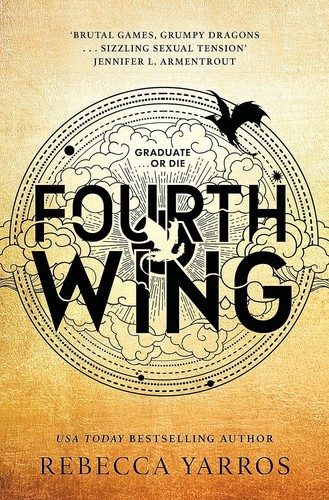
- Fourth Wing by Rebecca Yarros — women bonding with wild, dangerous creatures and surviving institutions designed to break them. Different genre, same defiance. Fourth Wing discussion guide.
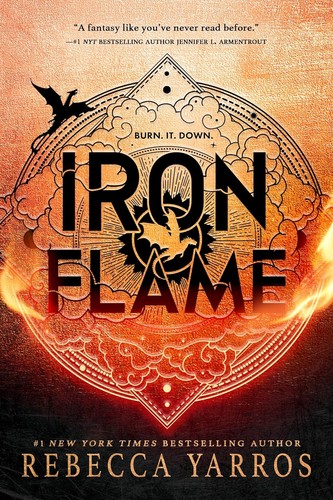
- Iron Flame by Rebecca Yarros — the sequel escalates the conspiracy and the cost of knowing things the people in charge don’t want you to know. Iron Flame discussion guide.
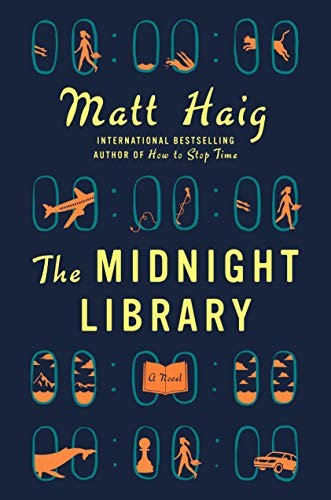
- The Midnight Library by Matt Haig — one woman, infinite possible lives, and the question of which version of yourself you can actually bear to be. The Midnight Library discussion guide.
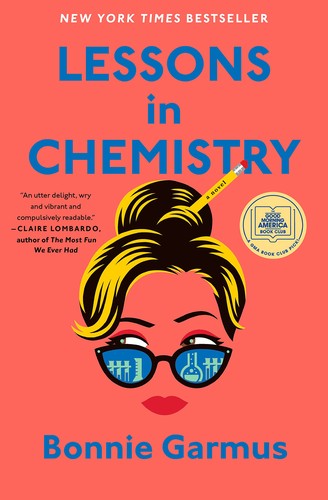
- Lessons in Chemistry by Bonnie Garmus — a woman whose competence is treated as a threat, set in the 1960s but aimed squarely at the present. Lessons in Chemistry discussion guide.
Read Weyward with neighbours in a Mutuals circle. Learn how to run a great reading-circle discussion. Explore more historical fiction picks for book clubs.
About Mutuals
Mutuals matches you with a handful of neighbours whose reading taste overlaps with yours into a local reading circle close to home: monthly meetups, no app fatigue. Free to sign up; you only pay $15 if a circle actually forms around you. If you want to read Weyward with people who live nearby and talk about what the word “witch” has always really meant, that’s exactly what we built for.
Imagine reading Weyward with a handful of neighbours who love it too. mutuals matches you with local readers who share your taste. Free to join, and just $15 on the day your circle forms.
Match with neighboursMore guides like this
From the blog
Discussion guide by the mutuals team. Questions are original.
More book guides