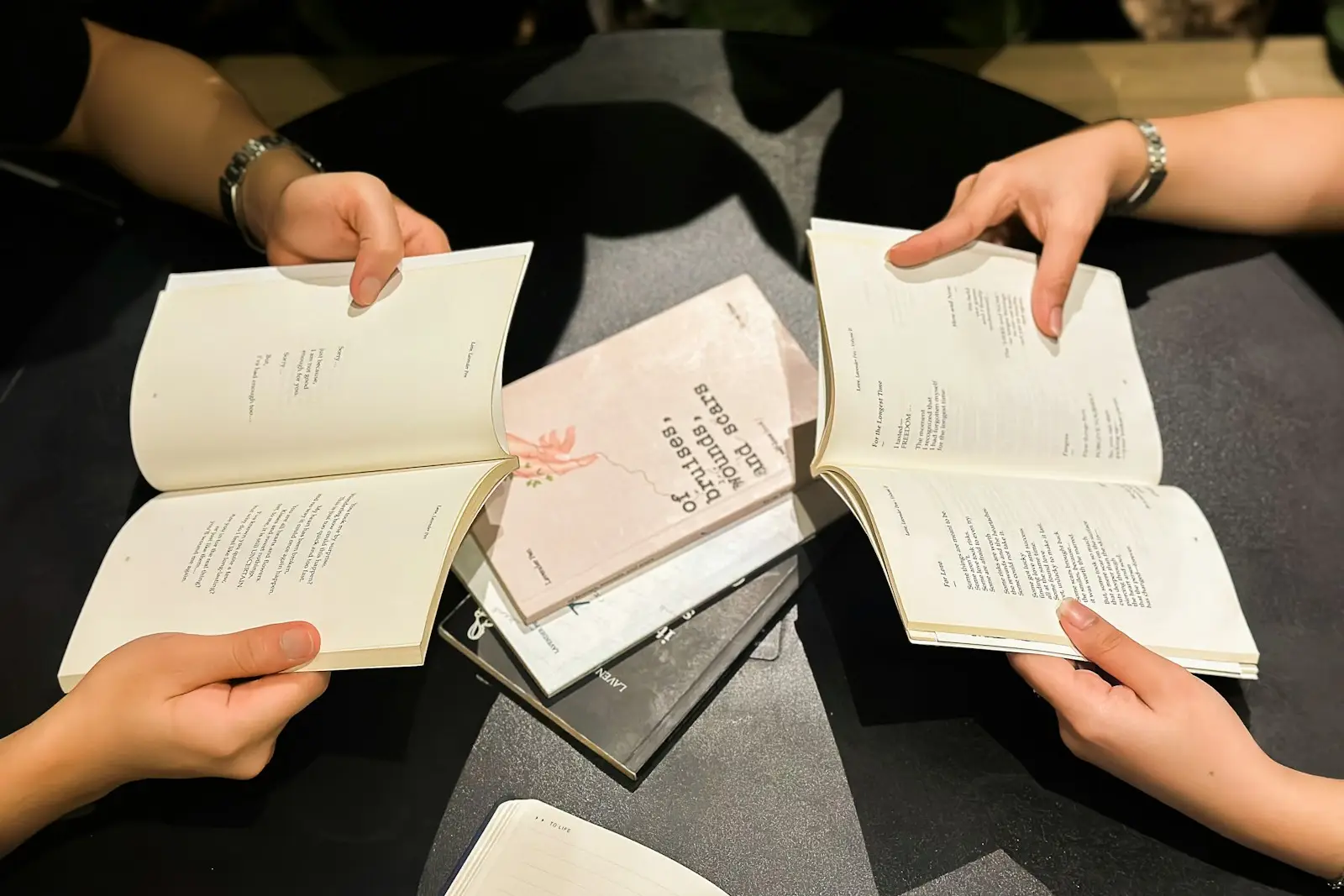
If you run a community that is not about books, a book club might seem like an odd idea. Your people came for running, or food, or parenting tips, or yoga. Why would they want homework?
Because the book is not really the point.
A book club is a small group of people who agree to meet again, with something to talk about when they do.
That is the hardest thing to create in any community. A book makes it easy.
The problem every community hits
Most communities start online and want to meet in person. The first meetup is exciting. The hard part is making it repeat.
Friendship takes time together. A University of Kansas study by Jeffrey Hall found it takes roughly 50 hours to go from acquaintance to casual friend, and about 90 hours to become friends. One great event cannot provide that. A recurring small group can.
People also have less of that time than they used to. The US Surgeon General’s 2023 advisory on loneliness reports that time spent in person with friends fell from about 60 minutes a day in 2003 to about 20 minutes in 2020.
Seven reasons the format works
- A built-in agenda. Nobody has to fill the silence after “so, what do you do?” Everyone has something to say, even if it is “I hated the ending.”
- A small group by design. A classic study, Dunbar, Duncan and Nettle (1995), found an upper limit of about four people in one spontaneous conversation. A small book club keeps everyone in the same one.
- A next meeting. Finish one book, pick the next. That is the recurring contact friendship needs.
- Almost no cost. A café table or a park bench. No venue hire, no catering.
- Room for quieter people. It is often easier to talk about a book than about yourself.
- No host needed. After a couple of meetings, the group picks its own books and dates.
- Any niche. The book can be on your topic or nothing to do with it.
How it fits communities that are not about books
The trick is that the book can be on topic, off topic, or somewhere in between.
Run clubs
Running communities already pair reading with running. Atlanta Track Club runs Runners Who Read, its official book club for running-related books.
Charlotte Running Club runs a running book club: every other month, members read a running book, then meet for an optional run and a discussion over food.
Food and supper clubs
Food writing is a natural fit, and a book club gives a supper club something to do between dinners. Some groups cook a dish from the book and bring it along.
Parents
Many parents want adult conversation that is not about nap schedules. A small book club fits around childcare. Choose short books.
Wellness, yoga and pilates
Students who see each other in class every week often never talk. A book club is a gentle way to change that.
| Community | On topic | A change of pace |
|---|---|---|
| Run club | Born to Run, Christopher McDougall | What I Talk About When I Talk About Running, Haruki Murakami |
| Food | Tender at the Bone, Ruth Reichl | Kitchen Confidential, Anthony Bourdain |
| Parents | Hunt, Gather, Parent, Michaeleen Doucleff | Foster, Claire Keegan |
| Wellness | Four Thousand Weeks, Oliver Burkeman | Platonic, Marisa G. Franco |
For a first meeting, pick whichever book is shorter.
If your audience is broad, let people choose by taste. A small group with similar taste can skip the compromise pick that a large group often ends up with. Our list of the best book club books of 2026 is a good place to start.

A simple way to start this month
- Ask first. Post a story or a note: “Would you join a small book club with other people from here?” The replies show interest, and roughly where people live.
- Group by area. A book club that meets twenty minutes from home lasts longer than one that needs a trip across town.
- Pick a short first book. Under 250 pages, easy to find at a library or a local bookshop.
- Set the first date and place. A café on a weeknight is enough. Give it a start and an end time.
- Hand it over. After the first meeting, the group chooses the next book and date. Your job is done once they do.
Why book clubs fall apart
Most of the usual failures are avoidable.
The group is too big. The conversation splits and quieter members stop coming. Keep groups small.
The first book is too long. A 600-page first pick is a test nobody asked for.
Nobody sets the next date. If the group leaves without a date, there may not be a second meeting. Set it before anyone stands up.
The group does not fit. People with very different taste struggle to find a rhythm. Matching on taste and living nearby helps.
People feel guilty about not finishing. Say it out loud: you are welcome even if you did not finish. The meeting is the point.
Our guide to starting a book club that lasts goes deeper on all of this.
When one book club is not enough
If you already host a book club that works, keep it. Nothing here needs to replace it.
The harder case is a community with no book club yet, or more interest than one host can handle: a waitlist, a full table, people you keep turning away. One book club is easy to start. Ten is a project.
A book, a small group, and a date for next time. For a lot of people, that is how a community stops being a feed and becomes a few familiar faces.
Mutuals sorts your followers into small local book clubs by taste and neighbourhood, sends the introductions, and checks in afterwards to see whether each group met. Your followers sign up on your own page. You set the match fee and keep 75%, and it is free to set up.
More writing
Guides for your next meeting
All guides

Written by the mutuals team.
More writing