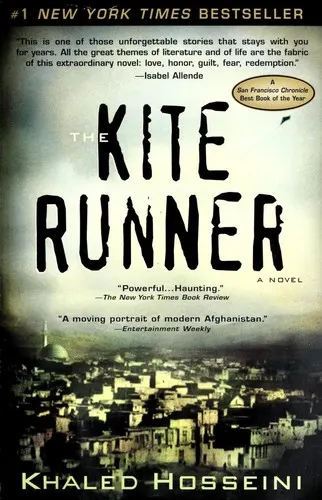
About The Kite Runner
Amir grows up in Kabul in the 1970s, the son of a wealthy, larger-than-life father he calls Baba. His closest companion is Hassan, the son of Baba’s servant, Ali. Hassan is a Hazara, a minority the boys’ society looks down on, and he is loyal to Amir in a way Amir never quite returns. In the winter of 1975, Amir wins the city’s kite-fighting tournament, and Hassan runs to fetch the last kite cut down. What happens to Hassan in an alley that afternoon, and what Amir does not do about it, shapes the rest of both their lives. The Soviet invasion sends Amir and Baba to California, but the past keeps calling. Khaled Hosseini’s first novel became one of the most widely read book club novels of its decade. It gives a group a lot to argue about: whether Amir deserves forgiveness, what a person owes a friend, and how a country’s history runs through one family.
Discussion questions for The Kite Runner
Amir tells the story as an adult, looking back. How does knowing he is writing from guilt affect how much you trust his account of his childhood?
Hassan is endlessly loyal to Amir. Amir is not always loyal back, and he knows it. Why do you think Amir struggles to call Hassan his friend out loud?
Amir longs for his father’s approval and often feels he falls short. What does Baba want from his son? Is Baba a good father?
The kite tournament is the happiest day of Amir’s childhood and also the day everything breaks. Why do you think Hosseini put these two things on the same day?
In the alley, Amir watches and does nothing. Later, he makes things worse to avoid facing what he saw. Did you understand his choices, even if you could not forgive them?
Assef is a frightening figure from the first time we meet him. What does he represent in the novel, beyond one cruel boy?
Life in Fremont, California, is very different from life in Kabul. How do Baba and Amir each adapt to being immigrants? What did Baba lose that Amir did not?
Soraya has a past that her community will not let her forget. How does her honesty with Amir compare with his secrecy with her?
Rahim Khan tells Amir there is a way to be good again. What does he mean? Can a person make up for a wrong done to someone who is no longer there to forgive them?
Midway through, Amir learns a secret about his own family. How did it change the way you saw Baba, Ali, and Hassan?
The novel moves from the monarchy, through the Soviet war, to Taliban rule. How did the book shape your understanding of Afghanistan’s recent history? Where did it feel like history, and where like melodrama?
The ending offers something small rather than a full healing. Did it feel earned? What would full redemption have looked like for Amir?
Themes in The Kite Runner
Guilt and the long search for atonement
Amir’s failure in the alley is the hinge of the novel. He spends years trying to bury it, then years more trying to make up for it. Hosseini asks whether guilt can ever be paid off, or whether the best a person can do is to keep trying to act better than he once did.
Fathers and sons
Amir wants Baba’s love and respect, and he often feels he has neither. Baba is generous, brave, and proud, but he is also hiding something. The novel looks at how sons inherit their fathers’ strengths and their secrets, and at how hard it is to see a parent as a whole, flawed person.
Class and ethnicity
Hassan and Ali are Hazara, and they serve a Pashtun household. The boys grow up together, yet their futures are fixed by who they were born to. The book shows how prejudice shapes even the closest relationships, and how it becomes brutal violence when it is given power.
Home and exile
Baba and Amir rebuild their lives in California among other Afghan exiles. They keep old customs, old rivalries, and old ideas of honour. When Amir returns to Kabul years later, he finds a city he barely knows. The novel asks what home means when the place you came from has changed beyond recognition.
Main characters in The Kite Runner
- Amir: the narrator, the son of a wealthy Kabul household, who grows up to become a writer in California.
- Baba: Amir’s father, a respected and forceful businessman.
- Hassan: the son of Baba’s servant, Ali. He is Amir’s childhood companion and the kite runner of the title.
- Ali: Baba’s servant and Hassan’s father, a quiet and dignified man.
- Rahim Khan: Baba’s close friend and business partner, and a gentle mentor to Amir.
- Assef: a violent older boy from the neighbourhood who torments Hassan.
- Soraya: the woman Amir meets in California and marries. She is the daughter of General Taheri.
- General Taheri: a former Afghan army officer living in exile in California.
- Sohrab: Hassan’s son, who appears in the later part of the novel.
The Kite Runner ending explained (spoilers)
This section gives away the ending. Skip it if your club has not finished the book.
Rahim Khan, who is dying, calls Amir to Pakistan. He tells Amir that Hassan was Baba’s son, which makes Hassan Amir’s half-brother. Hassan and his wife have been killed by the Taliban in Kabul, and their son, Sohrab, is in an orphanage. Amir goes back to Kabul to find him. He learns that Sohrab has been taken by a Taliban official, who turns out to be Assef. Assef beats Amir badly, and Sohrab saves him by firing a slingshot into Assef’s eye.
Bringing Sohrab to America is slow and hard. When Amir tells him he may have to go back to an orphanage for a while, Sohrab attempts suicide. He survives, and Amir and Soraya take him home to California, but he barely speaks for months. In the last scene, Amir flies a kite with Sohrab at a gathering of Afghans in a park, and runs the kite for him, as Hassan once did for Amir. Sohrab gives a small smile. It is not a full recovery, but it is a beginning.
Suggested book club format
- Length: About 370 pages, roughly nine hours of reading.
- Session count: Two sessions work well. A natural break comes after Baba’s death in California, before Rahim Khan’s phone call. Save Amir’s return to Afghanistan for the second meeting.
- Icebreaker: “Tell us about a childhood friend you lost touch with. What do you wish you had said?”
- Moderator note: The novel includes the rape of a child, ethnic violence, a public execution, and a child’s suicide attempt. Name these at the start. Some members may want to skip certain chapters, and that is fine. Keep crisis resources to hand.
How a real club read this
Share how your circle discussed The Kite Runner: tell us about your reading circle.
More books like The Kite Runner
- Pachinko by Min Jin Lee: a family across generations, shaped by war, migration, and the prejudice of the country they move to. Pachinko discussion guide.
- The Book Thief by Markus Zusak: a childhood friendship tested by war and by the cruelty of the society around it. The Book Thief discussion guide.
- The Covenant of Water by Abraham Verghese: a sweeping family saga, rooted in one place, carrying a secret through the generations. The Covenant of Water discussion guide.
- The Heart’s Invisible Furies by John Boyne: one man’s life across decades of his country’s history, and the shame and secrets that shape it. The Heart’s Invisible Furies discussion guide.
Read The Kite Runner with neighbours in a Mutuals circle. Learn how to run a great reading-circle discussion. Explore more literary fiction picks for book clubs.
About Mutuals
Mutuals matches you with a handful of neighbours whose reading taste overlaps with yours into a local reading circle close to home: monthly meetups, no app fatigue. Free to join. $15 only when we find your circle. If you want to read The Kite Runner with people who live nearby and talk honestly about guilt, loyalty, and home, that is exactly what we do.
Bring The Kite Runner to a Mutuals reading circle near you →
Turn the next chapter into a plan
Find a few nearby readers who share your taste. Free to sign up; $15 when you join your matched circle.
Also on the shelf
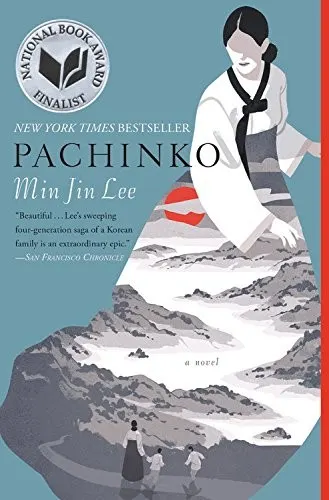 Pachinko
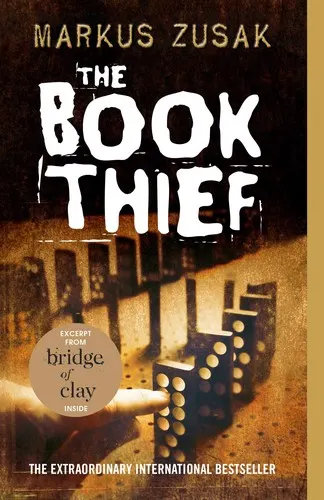 The Book Thief
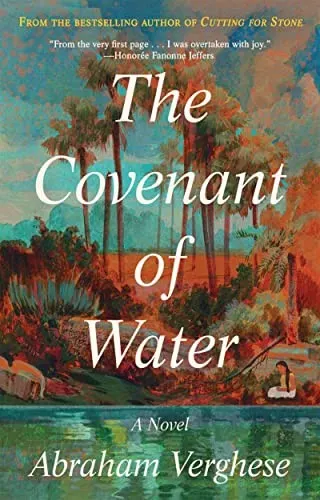 The Covenant of Water
 The Heart's Invisible Furies
From the reading bulletin
Original discussion questions by mutuals. Browse all book guides →