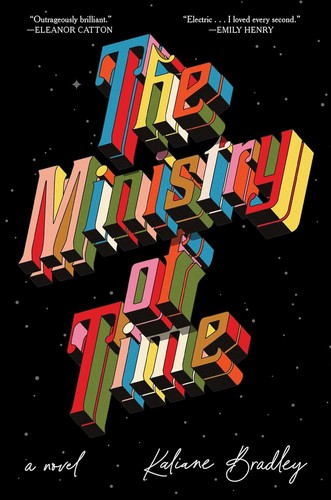
About The Ministry of Time
The British government has found a way to travel through time, and a new ministry is pulling people out of the past just before they would have died. These time travellers are called “expats.” Each one is placed with a “bridge,” a civil servant who lives with them, helps them adjust to the present, and reports on how they are doing. The unnamed narrator, the daughter of a Cambodian refugee mother, takes the job. Her expat is Commander Graham Gore, a real naval officer who died on Sir John Franklin’s lost Arctic expedition in the 1840s. Gore has to learn about washing machines, Spotify, and the end of the British Empire. Over one hot London summer, the two go from awkward housemates to friends to something more. Kaliane Bradley’s debut is part romantic comedy, part spy thriller, and part serious novel about empire, race, and who gets to be rescued. Book clubs like it because it is fun to read and then turns out to have a great deal to argue about.
Discussion questions for The Ministry of Time
The narrator is never named. For most of the book she is simply “the bridge.” Why do you think Bradley kept her nameless? Did it change how close you felt to her?
The Ministry calls the time travellers “expats.” The narrator’s mother, who fled Cambodia, was always called a refugee. Why does the Ministry care so much about the label? Where else in the novel does a chosen word hide what is really going on?
The narrator is paid to befriend Gore and also to report on him. At what point did that double role start to feel wrong to you? Could anyone do that job honestly?
Gore loves hot baths and music streaming, but other parts of modern life puzzle or upset him. Which of his reactions made you laugh? Which made you look at something in your own life differently?
Some chapters leave London and follow Gore on the Franklin expedition in the Arctic. How did those chapters change the way you saw the man living in the narrator’s flat?
Gore was an officer of the British Empire who took part in its wars. The narrator’s family was shaped by war and displacement in Southeast Asia. How does the novel handle a romance across that history? Did you find it believable?
Maggie, from the seventeenth century, takes to modern dating with joy. Arthur, a shy captain from the First World War, struggles. Which expat adapted best, and what does fitting in cost each of them?
The book starts as a comedy and turns into a thriller, with chases, betrayals, and real danger. Did the change of tone work for you? Where did the story pull you in, and where did it lose you?
Bradley began with short, funny scenes written for an online group of polar exploration fans: what if your favourite explorer were your housemate? Little is known about the real Gore, so much of him is invented. Does it matter to you that he was a real person? Is it fair to write a love story about someone who cannot answer back?
The narrator is mixed-race and often reads as white inside a British government office. How does her position shape what she notices, what she lets slide, and what she finally refuses to accept?
Late in the novel, the narrator learns something about a person close to her that changes the meaning of the whole story. Without spoiling it for anyone who has not finished: did you see it coming? What does it say about whether we can change who we will become?
The Ministry rescues people from history without asking whether they want to be rescued. Is a rescue still a rescue if no one asked? Who was the project really for?
Themes in The Ministry of Time
Empire and who tells history
Gore is charming, funny, and kind. He is also a man who served an empire at its most confident. Bradley does not let the reader forget either fact. The novel keeps asking who gets remembered as a hero, who gets left out of the story, and whether a modern government that “rescues” the past is any different from the empires it studies.
The power of a label
Expat or refugee. Bridge or minder. Rescue or experiment. The Ministry’s words are carefully chosen, and the narrator, a former translator, notices them. The book shows how the right word can make a hard thing sound gentle, and how much depends on who gets to choose it.
Love under watch
The narrator falls for a man she is paid to observe. Every tender moment is also, in a sense, a report waiting to be filed. The romance is real, but it is never private. That tension gives the love story its edge and raises the question of whether two people can be honest inside a system built on watching.
Out of place, out of time
Everyone in this book is displaced. The expats have lost their whole worlds. The narrator’s mother left hers behind. Even the narrator does not fully belong at work or at home. The novel treats time travel as a way of talking about something many readers know first-hand: starting again somewhere that does not quite fit.
Suggested book club format
- Length: About 340 pages, roughly eight hours of reading.
- Session count: One session. The book reads quickly, and the big conversations about the ending and its twists work best when everyone has finished.
- Icebreaker: “If you could bring one person out of history to live in your spare room for a year, who would it be, and what would you show them first?”
- Moderator note: The book is often marketed as a romantic comedy, but it includes violence, deaths, frank discussion of racism and colonial history, and several explicit sex scenes. Let members know before the meeting. Some will want to talk about the romance and others about the politics, so leave room for both.
How a real club read this
Share how your circle discussed The Ministry of Time: tell us about your reading circle.
More books like The Ministry of Time
- Babel by R.F. Kuang: translation, language, and the machinery of the British Empire, seen from inside one of its institutions. Babel discussion guide.
- Klara and the Sun by Kazuo Ishiguro: an outsider learning the rules of a world that was not built for them, told with quiet strangeness. Klara and the Sun discussion guide.
- The Midnight Library by Matt Haig: another speculative premise that becomes a question about which life is worth living. The Midnight Library discussion guide.
- Tomorrow, and Tomorrow, and Tomorrow by Gabrielle Zevin: a long, complicated love between two people that refuses to fit the usual romance shape. Tomorrow, and Tomorrow, and Tomorrow discussion guide.
Read The Ministry of Time with neighbours in a mutuals circle. Learn how to run a great reading-circle discussion. Explore more discussion guides for book-club picks.
About mutuals
mutuals matches you with a handful of neighbours whose reading taste overlaps with yours into a local reading circle close to home: monthly meetups, no app fatigue. Free to join. $15 only when we find your circle. If you want to read The Ministry of Time with people who live nearby and argue about Graham Gore, that is exactly what we do.
Bring The Ministry of Time to a mutuals reading circle near you →
Turn the next chapter into a plan
Find a few nearby readers who share your taste. Free to sign up; $15 when you join your matched circle.
Also on the shelf
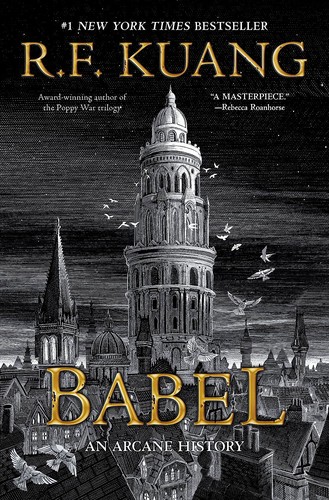 Babel
Babel Klara and the Sun
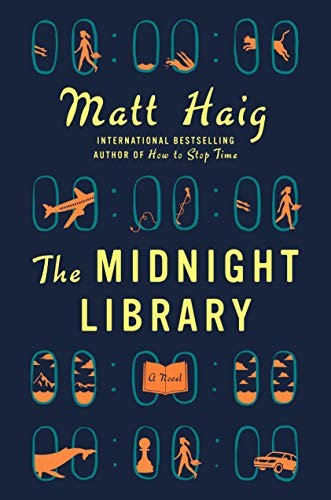 The Midnight Library
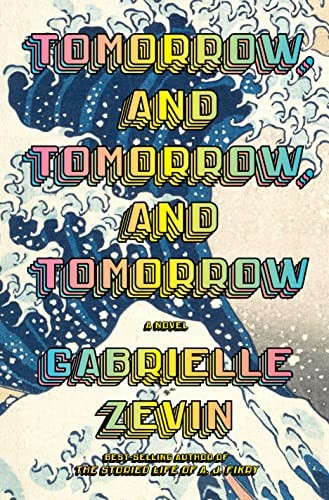 Tomorrow, and Tomorrow, and Tomorrow
From the reading bulletin
Original discussion questions by mutuals. Browse all book guides →