The Midnight Library Discussion Questions & Book Club Guide
by Matt Haig
Want to read The Midnight Library with a few people nearby?
About The Midnight Library
Nora Seed is thirty-five, exhausted, and out of reasons to keep going. The night she decides to end her life she wakes inside a library that exists between life and death. Every book on the shelves contains a version of her life she might have lived: the one where she married her ex, the one where she became a glaciologist, the one where her cat didn’t die. Matt Haig’s 2020 novel turns the multiverse premise — usually a sci-fi toy — into something quieter and more direct: a question about which regrets are actually about other people, and which are about ourselves. It’s a fast read with a heavy emotional payload, which is exactly why book clubs keep picking it up.
Discussion questions for The Midnight Library
Nora’s library contains every life she might have lived. If you had to pick one shelf to open first, which “what if” would it be — and what does that choice say about your current life?
The novel argues that most regrets feel less heavy once you’ve actually lived the alternate life. Do you buy that, or does it let people off the hook for choices they could still make differently?
Mrs. Elm shows up in nearly every version of Nora’s life. What does it mean that the people who anchor us are sometimes the ones we barely thought about?
Nora keeps comparing her “root life” to the alternatives. Is there a moment where her root life starts looking better — and if so, what triggers that shift?
The book treats depression as a literal absence of possibility. Does that metaphor work for you, or does it oversimplify something more complicated?
Each life Nora enters has its own set of losses alongside its gains. Which alternate life felt the most genuinely tempting to you — and which felt like a trap?
Hugo is the only other person Nora meets in the library. What role does he play in her understanding of the choice she’s making?
The ending resolves Nora’s crisis fairly quickly once she decides to live. Is that earned, or does it feel too neat for the weight of what came before?
Haig dedicates the book to people who feel like giving up. How does knowing that context change the way you read the story — as comfort, as argument, or as something else?
The Midnight Library has been a massive book-club pick since 2020. Why do you think groups keep choosing it — is it the accessibility, the topic, or the structure?
If you could write a letter to Nora at the start of the book — before the library — what would you say? What would you leave out?
The book suggests that the best life isn’t the one with the fewest regrets but the one you’re most present in. Do you agree, or is that just a comfortable thing to believe?
Themes in The Midnight Library
Regret as a question, not a verdict
Haig writes regret as data — information about what mattered, not a sentence to serve. Most of Nora’s regrets turn out to be about other people’s expectations once she actually inhabits the alternative. For a book club, the most interesting tension is which regrets survive the test of being lived.
The weight of parallel lives
Every life Nora enters carries its own grief. The novel refuses to let any alternative be purely better — each one trades one kind of pain for another. That structure forces readers to examine whether “better” is even a useful frame for the choices we’ve already made.
Depression and the collapse of possibility
Nora’s crisis isn’t about a single event but about the feeling that every door has closed. Haig translates clinical depression into a spatial metaphor — the library — that makes the internal experience legible to people who haven’t felt it. It’s effective, though some readers may find it too tidy.
Connection as the thing that survives
Across every life, the relationships that matter most to Nora aren’t the ones she expected. The cat, Mrs. Elm, her brother — the constants aren’t romantic partners or career achievements but the small, persistent attachments she undervalued.
Permission to choose the imperfect life
The book’s final argument is that choosing to live — even a flawed, unglamorous life — is itself the meaningful act. It’s less about optimism than about releasing the idea that there’s a correct life hiding behind the one you have.
Suggested book club format
- Length: 288 pages, roughly five to six hours of reading.
- Session count: One session works well. For groups that prefer to break, split at the midpoint around Chapter 30 when Nora enters her first “successful” life.
- Icebreaker: “What’s a ‘what if’ you’ve genuinely let go of, and what was the moment it stopped weighing on you?”
- Moderator note: This book addresses suicide and depression directly. Name that at the start and make space for anyone who needs to step out. The tone is ultimately hopeful, but the opening chapters are heavy.
How a real club read this
Share how your club discussed The Midnight Library — tell us about your reading circle.
More books like The Midnight Library
- Klara and the Sun by Kazuo Ishiguro — consciousness and care through an AI narrator’s eyes.
- The House in the Cerulean Sea by TJ Klune — chosen family and small-town warmth in a world that mistrusts difference.
- Life After Life by Kate Atkinson — parallel lives done denser and more historically grounded than Haig’s version.
- Before the Coffee Gets Cold by Toshikazu Kawaguchi — short, atmospheric, and shaped around the same regret-and-time territory.
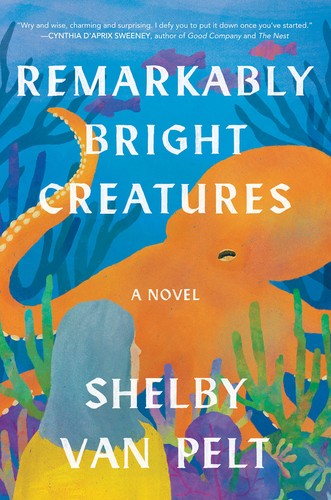
- Remarkably Bright Creatures by Shelby Van Pelt — grief, second chances, and an unlikely narrator with the same warm heart. Remarkably Bright Creatures discussion guide.
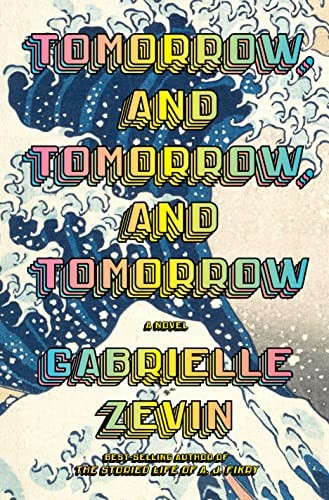
- Tomorrow, and Tomorrow, and Tomorrow by Gabrielle Zevin — parallel lives of a different kind: the games we build out of the choices we didn’t make. Tomorrow, and Tomorrow, and Tomorrow discussion guide.
Read The Midnight Library with neighbours in a Mutuals circle. Learn how to run a great reading-circle discussion. Explore more discussion guides for book-club picks.
About Mutuals
Mutuals matches you with a handful of neighbours whose reading taste overlaps with yours into a local reading circle close to home: monthly meetups, no app fatigue. Free to sign up; you only pay $15 if a circle actually forms around you. If you want to read The Midnight Library with people who live nearby, that’s literally what we do.
Bring The Midnight Library to a Mutuals reading circle near you →
Imagine reading The Midnight Library with a handful of neighbours who love it too. mutuals matches you with local readers who share your taste. Free to join, and just $15 on the day your circle forms.
Match with neighboursMore guides like this
From the blog
Discussion guide by the mutuals team. Questions are original.
More book guides