The Heart's Invisible Furies Discussion Questions & Book Club Guide
by John Boyne
Want to read The Heart's Invisible Furies with a few people nearby?
About The Heart’s Invisible Furies
In 1945, in a small church in County Cork, a priest drives a pregnant teenage girl from the parish. Her son, Cyril Avery, is adopted by a wealthy Dublin couple who never let him forget that he is not a real Avery. John Boyne follows Cyril across seven decades — through a closeted youth in mid-century Ireland, emigration to Amsterdam and New York, the devastation of the AIDS crisis, and an Ireland slowly, painfully reckoning with its own cruelty. At nearly 600 pages, it reads like 300; Boyne writes with dark comedy, structural audacity, and genuine fury. The recurring coincidences are deliberate — this is a novel about how a small country keeps folding the same people back into each other’s lives. Book clubs love it because every reader finds a different decade that wrecks them, and nobody agrees on which one.
Discussion questions for The Heart’s Invisible Furies
The opening scene — a priest shaming Catherine Goggin out of her community — sets the moral stakes for everything that follows. How does that scene function differently when you revisit it mentally at the end of the book compared to when you first read it?
Maude and Charles Avery are comic creations, almost absurdly self-absorbed, yet they raise Cyril in their own peculiar way. Do you think Boyne wants you to see them as failed parents, or as the best a certain kind of Ireland could produce?
Cyril spends decades knowing he is gay and telling no one. How does the novel dramatize the internal cost of that silence — not just the loneliness, but the way it deforms his ability to be honest about anything?
Julian Woodbead is Cyril’s first love and, in many ways, his defining wound. What does Julian represent beyond himself — and do you think Cyril ever sees Julian clearly, or only sees what he needs him to be?
The novel’s middle sections follow Cyril through Amsterdam and New York during the AIDS crisis. How does Boyne handle the shift from Irish social comedy to epidemic grief, and did the tonal change work for you?
Boyne uses recurring coincidences — characters reappearing across decades, chance encounters in airports and parks — as a deliberate structural device. Did these feel like earned design or authorial contrivance, and what do they argue about the nature of a small country’s social fabric?
Ireland itself changes enormously over the course of the novel, from a theocratic state to one that votes for marriage equality. How does Boyne use Cyril’s personal timeline to measure the country’s moral evolution — and where does he suggest the country still falls short?
Catherine Goggin’s story runs parallel to Cyril’s but is told in fragments. How does the novel’s handling of the birth mother differ from what you expected, and what does her arc add that Cyril’s alone couldn’t?
Several characters in the book die from AIDS-related illness, and the deaths are narrated with specific, unsentimental detail. How does Boyne’s treatment of those deaths compare to how you’ve seen the crisis represented elsewhere in fiction or film?
Cyril’s relationship with his own body — desire, shame, ageing — shifts across every section. At what point in the novel did you feel he finally inhabited his life rather than observing it?
The final chapter brings Cyril full circle in several ways. Does the ending feel earned after 600 pages, or does Boyne tidy things that the rest of the novel left deliberately ragged?
The novel covers seven decades but never feels like a historical survey. What techniques does Boyne use to keep each era immediate rather than summarized, and which decade did you find most vivid?
This is a very long book that many readers finish in a few days. What is it about Boyne’s pacing or voice that compresses 592 pages into what feels like a much shorter read — and is that velocity a strength or does it sometimes cost the novel depth?
Themes in The Heart’s Invisible Furies
Shame as inheritance
Catherine is shamed out of her parish; Cyril inherits that shame without knowing its origin. The novel argues that shame in Ireland is not an individual emotion but a social technology — passed from church to community to family to child, each generation carrying damage it didn’t choose. Boyne traces the transmission with precision, showing how shame operates even when its original source has been forgotten.
The cost of the closet
Cyril’s decades of hiding don’t simply postpone happiness — they corrode his capacity for intimacy, honesty, and self-knowledge. Boyne is unsparing about what the closet actually costs: not just years of loneliness but a lifetime of reflexive dishonesty that infects every relationship Cyril touches. The novel frames the closet not as a refuge but as a slow-acting poison administered by the state.
Ireland’s relationship with its own cruelty
The Catholic Church, the criminal law, the neighbours who looked away — Boyne indicts not a few bad actors but an entire culture’s willingness to punish difference. As Ireland changes across the decades, the novel asks whether progress erases complicity or merely buries it. The marriage-equality referendum in the final section is celebrated, but Boyne doesn’t let the country off the hook for what it did on the way there.
Chosen family versus biological family
Cyril’s adoptive parents remind him he is not a real Avery. His birth mother was forced to abandon him. The family he eventually builds — late, fragile, improvised — is assembled from people who chose each other after the institutions of blood and law failed them. Boyne suggests that chosen family is not a consolation prize but the more honest version of the thing.
The long arc of social change
The novel spans from 1945 to 2015, and the Ireland of the final chapter is almost unrecognizable compared to the Ireland of the first. Boyne uses that arc to ask a hard question: is seventy years of suffering an acceptable price for eventual progress? The novel’s answer is complicated — it celebrates the arrival of equality while refusing to forgive the decades that made it necessary.
Suggested book club format
- Length: 592 pages, roughly eleven to thirteen hours of reading.
- Session count: Two to three sessions work best, broken by decade. A natural two-session split falls at Part Four (around page 300, when Cyril leaves Ireland), separating the Dublin years from the emigration and return. A three-session version adds a break at Part Six (around page 450, when the AIDS crisis recedes and Cyril returns to Ireland), giving each session a distinct emotional register: youth and concealment, exile and loss, homecoming and reckoning.
- Icebreaker: “What’s one thing about the place or time you grew up in that you only understood was unusual once you left?”
- Moderator note: The novel depicts homophobia across multiple decades with sustained specificity, including violence and social rejection. It includes AIDS-related deaths described in clinical detail, a scene of sexual assault, and extensive portrayals of Catholic institutional abuse and coerced adoption. Flag these at the start of your first session. The comic tone can mask how hard certain passages land — check in with your group before the AIDS chapters and before the final section, which revisits several of these threads.
How a real club read this
Share how your club discussed The Heart’s Invisible Furies — tell us about your reading circle.
More books like The Heart’s Invisible Furies
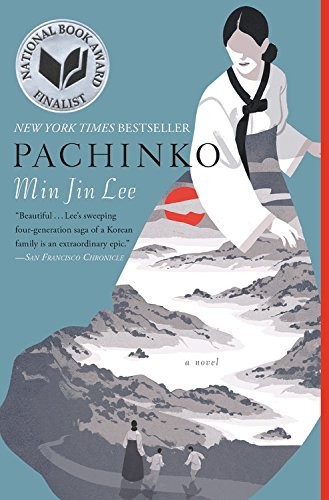
- Pachinko by Min Jin Lee — four generations of a Korean family caught between identity and survival across a hostile century, told with the same sweeping, fate-aware patience. Pachinko discussion guide.
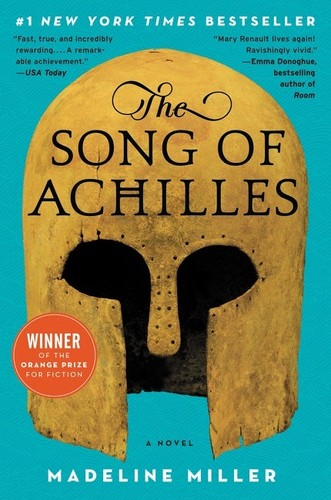
- The Song of Achilles by Madeline Miller — love, fate, and the cost of being visible, retold through the most intimate voice in Greek myth. The Song of Achilles discussion guide.
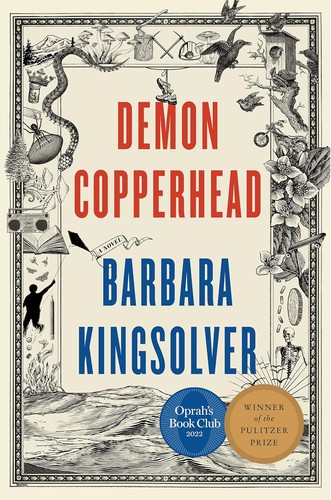
- Demon Copperhead by Barbara Kingsolver — a Dickensian saga of poverty, addiction, and systemic failure in Appalachia that earns every one of its 560 pages. Demon Copperhead discussion guide.
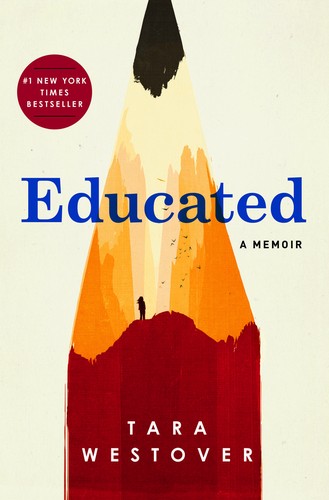
- Educated by Tara Westover — a memoir about escaping a survivalist family and discovering that education can be both liberation and loss, with the same central tension between self-invention and belonging. Educated discussion guide.
Read The Heart’s Invisible Furies with neighbours in a Mutuals circle. Learn how to run a great reading-circle discussion. Explore more literary fiction picks for book clubs.
About Mutuals
Mutuals matches you with a handful of neighbours whose reading taste overlaps with yours into a local reading circle close to home: monthly meetups, no app fatigue. Free to sign up; you only pay $15 if a circle actually forms around you. If you want to read The Heart’s Invisible Furies with people who live nearby and argue about which decade broke them hardest, that’s literally what we do.
Bring The Heart’s Invisible Furies to a Mutuals reading circle near you →
Imagine reading The Heart's Invisible Furies with a handful of neighbours who love it too. mutuals matches you with local readers who share your taste. Free to join, and just $15 on the day your circle forms.
Match with neighboursMore guides like this
From the blog
Discussion guide by the mutuals team. Questions are original.
More book guides