The Covenant of Water Discussion Questions & Book Club Guide
by Abraham Verghese
Want to read The Covenant of Water with a few people nearby?
About The Covenant of Water
In 1900, a twelve-year-old girl is married to a man she has never met and carried by boat to his family’s estate in Kerala, India. She will become the matriarch of a family haunted by a peculiar curse: in every generation, at least one member dies by drowning. Abraham Verghese’s 736-page novel follows three generations of this family from the final days of British India through 1977, braiding their story with that of Digby Kilgour, a Scottish surgeon whose work in tropical medicine eventually intersects with the family’s mystery. It is at once a medical detective story, a multigenerational saga, and a love letter to Kerala’s backwaters, monsoons, and red earth. For book clubs, it’s the kind of epic that groups either devour in a week or spread across three sessions — either way, it generates conversation for weeks.
Discussion questions for The Covenant of Water
The novel opens with a twelve-year-old girl being given in marriage to a much older man. How does Verghese handle this scene — and does the way he frames it set the moral terms for the rest of the book?
The drowning curse runs through every generation. At what point, if any, did you begin reading it as metaphor rather than literal affliction — and does the novel want you to choose one interpretation over the other?
Verghese is a physician who writes fiction. Where in the novel did you feel the doctor’s eye most clearly — in the clinical detail, the diagnostic patience, or something else — and did it change the way the prose felt compared to other literary fiction?
Digby Kilgour arrives in India as a colonial surgeon. How does the novel position his genuine compassion against the structural violence of the system he serves, and did you find him sympathetic, complicit, or both?
The medical mystery at the heart of the book resolves in a way that connects the curse to a specific condition. Did the resolution satisfy you as both science and story, or did naming the thing diminish it?
Faith and science coexist uneasily throughout the novel — in the family’s Christianity, in Digby’s medicine, in the local traditions around water. Where does Verghese seem to locate the boundary between what can be explained and what must simply be lived with?
Three generations of women anchor this story: Big Ammachi, Mariamma, and the women who orbit them. Which generation’s experience of duty, love, and sacrifice resonated with you most — and is that because of the characters or because of what their era demanded?
Water is simultaneously the source of life in Kerala — the monsoons, the backwaters, the rice paddies — and the instrument of the family’s grief. How does Verghese keep the dual nature of water from feeling like a neat symbol and make it feel like a lived reality instead?
The novel spans seventy-seven years and 736 pages. Were there sections where the length felt earned and others where it felt indulgent, or did the accumulation of detail serve a single argument about how families work?
Leprosy and its stigma appear repeatedly. How does the novel use the disease — its visibility, its slow progression, the fear it generates — as a mirror for other forms of social exclusion in the story?
Kerala itself functions almost as a character: the landscape, the weather, the political shifts from colonialism through independence to the Emergency. How much of your experience of the novel depended on place, and could this story have been set anywhere else?
Mariamma becomes a doctor, closing a circle that connects her to Digby across decades. Does the novel frame medicine as redemption, as inheritance, or as something more ambivalent?
The final revelation ties together threads from across all three generations. Did you feel the ending honoured the scale of what came before, or did tying the threads together risk making the story feel smaller than its parts?
Themes in The Covenant of Water
Water as both life and death
Kerala’s identity is inseparable from water — the monsoons that feed the land, the backwaters that connect its villages, the sea that shapes its trade. Verghese builds the family’s drowning curse against this backdrop so that water is never simply a threat. It is the medium the characters depend on for everything from livelihood to worship, and the curse gains its power precisely because avoiding water in Kerala means cutting yourself off from life itself.
Faith and the body
The novel holds Christian faith and medical science in the same hand without forcing either to win. Big Ammachi prays with the same conviction that Digby operates, and Verghese treats both as responses to the same helplessness. What emerges is not a debate between religion and reason but a portrait of people reaching for whatever framework might make suffering legible — and finding that neither explanation is ever quite enough.
The weight of family obligation
Every generation inherits not just the drowning curse but a set of expectations about land, marriage, duty, and care. Characters sacrifice education, ambition, and love to hold the family together, and the novel is clear-eyed about the cost. Obligation in this book is not noble by default; it is a force that sustains the family and deforms the individuals inside it, often at the same time.
Colonialism and medicine
Digby arrives in India as a healer, but he arrives on a colonial ship. Verghese doesn’t let the reader forget that the hospital, the surgical theatre, and the research station all exist within a power structure that extracts as much as it gives. The novel asks whether good medical work done inside an unjust system redeems the practitioner, the system, or neither — and leaves the question open long enough to be uncomfortable.
The mystery we carry in our blood
The drowning curse turns out to have a physiological explanation, but the novel takes seven hundred pages to reach it. Along the way, Verghese builds a case that what families pass down — in genes, in stories, in silence — shapes descendants in ways that resist tidy diagnosis. The medical mystery is also a metaphor for inheritance itself: the things you carry without knowing their name, and the relief and loss that come when someone finally names them.
Suggested book club format
- Length: 736 pages, roughly sixteen to eighteen hours of reading.
- Session count: Three sessions strongly recommended. Session one through Part Two (Big Ammachi’s early marriage, the establishment of the estate, and the first drowning); session two through Part Five (Digby’s arrival, the war years, and the next generation coming of age); session three to the end (Mariamma’s medical training, the resolution of the mystery, and the Emergency). Trying to cover this in a single evening will flatten the generational architecture that makes the novel work.
- Icebreaker: “Is there something your family has always been afraid of — a place, a substance, an activity — that no one can fully explain the origin of?”
- Moderator note: The novel depicts child marriage, drowning (including the drowning of children), leprosy and its social stigma, and surgical procedures described in clinical detail. Verghese treats all of these with both medical precision and emotional care, but the accumulation across 736 pages can be heavier than any single scene suggests. Flag these topics at the start of your first session and check in at the beginning of each subsequent meeting.
How a real club read this
Share how your club discussed The Covenant of Water — tell us about your reading circle.
More books like The Covenant of Water
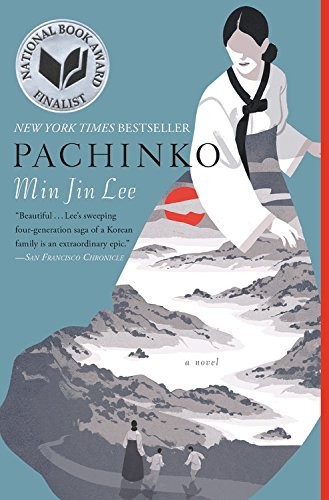
- Pachinko by Min Jin Lee — four generations of a Korean family in Japan, navigating identity, sacrifice, and belonging across nearly a century with the same multigenerational patience Verghese brings to Kerala. Pachinko discussion guide.
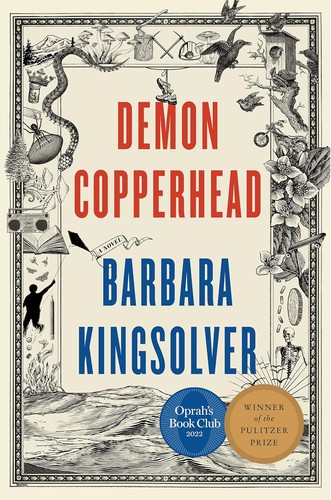
- Demon Copperhead by Barbara Kingsolver — a Dickensian saga of poverty and survival in Appalachia that shares Verghese’s interest in how systems — medical, social, economic — shape individual lives. Demon Copperhead discussion guide.
- The Heart’s Invisible Furies by John Boyne — one man’s life across six decades of Ireland, told with the same expansive warmth and the same willingness to let a long story earn its length. The Heart’s Invisible Furies discussion guide.
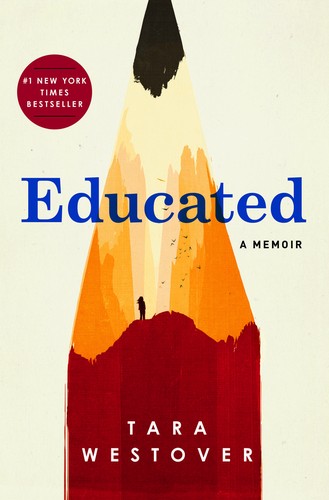
- Educated by Tara Westover — a memoir about a family’s grip and a daughter’s escape that resonates with The Covenant of Water’s central tension between what you inherit and what you choose. Educated discussion guide.
Read The Covenant of Water with neighbours in a Mutuals circle. Learn how to run a great reading-circle discussion. Explore more literary fiction picks for book clubs.
About Mutuals
Mutuals matches you with a handful of neighbours whose reading taste overlaps with yours into a local reading circle close to home: monthly meetups, no app fatigue. Free to sign up; you only pay $15 if a circle actually forms around you. If you want to read The Covenant of Water with people who live nearby and argue about whether naming the curse ruins or completes it, that’s literally what we do.
Bring The Covenant of Water to a Mutuals reading circle near you →
Imagine reading The Covenant of Water with a handful of neighbours who love it too. mutuals matches you with local readers who share your taste. Free to join, and just $15 on the day your circle forms.
Match with neighboursMore guides like this

From the blog
Discussion guide by the mutuals team. Questions are original.
More book guides