Trust Discussion Questions & Book Club Guide
by Hernan Diaz
Want to read Trust with a few people nearby?
About Trust
Four nested narratives circle the same married couple and the fortune they built in 1920s New York — and each version contradicts the last. The first is a novel about a financier and his brilliant, doomed wife. The second is that financier’s unfinished memoir, written to correct the novel’s portrait. The third belongs to the ghostwriter he hired, who has her own account of what happened. The fourth is the wife’s diary, quiet and devastating. Hernan Diaz’s 2022 Pulitzer winner is about who gets to write the story of a life and what happens when wealth buys the right to revise history. The wife — called Mildred, then Helen, then Ida depending on who is telling it — keeps getting rewritten by the men around her. Book clubs fight over this one because every section makes you reconsider what you believed in the last, and the table will argue about which version is true.
Discussion questions for Trust
The novel opens with Bonds, a piece of fiction within the fiction. At what point did you realize you were reading a constructed version of events, and how did that realization change the way you read everything that followed?
Each of the four sections has a different narrator, voice, and form. Which section did you trust the most — and did the group agree?
Benjamin Rask (or Andrew Bevel, depending on the section) is both a character and a construction. How does your understanding of him shift across the four narratives, and is there a version you think is closest to the real man?
Mildred, Helen, Ida — the wife is renamed in each retelling. What does each name reveal about who is doing the naming, and what does it mean that she never gets to name herself until the diary?
Bevel hires a ghostwriter to produce a memoir that will overwrite the fictional version of his life. What does the novel say about the relationship between money and narrative — can wealth literally purchase reality?
Ida Partenza’s diary is the last section and feels like the most intimate. Did you read it as the truth, or as one more constructed version that happens to arrive last?
Diaz sets the financial plot against the 1928 crash and the Depression. How do the wealth dynamics in the novel map onto contemporary conversations about billionaires, philanthropy, and who gets to shape public memory?
The ghostwriter, Mildred, occupies an unusual position — she’s complicit in Bevel’s project but also the one who exposes it. How did you read her morally? Is she a collaborator, a witness, or something else?
The novel’s structure is deliberately demanding. Did the formal ambition enhance the story for you, or did it create distance? Was there a section where you felt lost — and did the disorientation feel intentional?
Trust is a novel about erasure, specifically the erasure of women from their own stories. Where else — in history, in your own reading — have you seen this pattern, and did the book make you reconsider any of those instances?
Diaz never gives the reader a single authoritative account. Is the novel arguing that objective truth is impossible, or that truth exists but is always being fought over?
If you could add a fifth section — from any character’s perspective, in any form — whose voice would you choose and what would it reveal?
Themes in Trust
Narrative as power
Every section of the novel is an act of control. The novelist shapes the financier into a parable. The financier rewrites himself into a hero. The ghostwriter reveals the machinery behind the rewrite. The wife records what actually happened to her body and mind. Diaz treats storytelling not as art but as a weapon — whoever holds the pen holds the power, and the book traces exactly how that pen gets passed around and who never gets to hold it.
The erasure of women from their own stories
The wife is the centre of every narrative, yet she is rewritten, renamed, and reinterpreted by men in each one. In the novel-within-the-novel she’s a tragic muse. In the memoir she’s a grateful partner. Only in her own diary does she exist on her own terms — and even that document is one Diaz has constructed for her. The book asks how many real women have been flattened into someone else’s chapter, and whether the archive itself is a kind of burial.
Wealth and the purchase of reality
Bevel doesn’t just make money — he uses it to control how his life is remembered. He commissions a memoir, suppresses a novel, and funds the version of events that serves him. Diaz connects personal vanity to systemic power: the same mechanisms that let one man rewrite his marriage let a class rewrite the history of the economy. Wealth in this novel doesn’t just buy comfort; it buys the final draft.
The impossibility of a single truth
Four accounts, four contradictions, no resolution. Diaz refuses to tell the reader which version is real, and the structure forces you to hold all four simultaneously. The novel suggests that truth isn’t a destination — it’s a contested space, shaped by who has access, motive, and resources. The reader who insists on picking one correct version is doing exactly what the book warns against.
Suggested book club format
- Length: 416 pages, roughly eight to nine hours of reading.
- Session count: Two sessions recommended. Break between Part 2 and Part 3 — after Bevel’s memoir and before the ghostwriter’s account. This lets the first session sit with the tension between the novel and the correction, and the second session can watch that correction get dismantled.
- Icebreaker: “Tell us about a story you’ve heard retold very differently by two people — and which version did you believe?”
- Moderator note: The structure is demanding. Some readers will feel disoriented by the shifts in voice and form, especially between Parts 1 and 2. Reassure the group early that the confusion is the point — the book rewards patience, and the later sections illuminate the earlier ones. If someone stalled in Part 2, encourage them to push through to the ghostwriter’s section, which is where the architecture clicks into place.
How a real club read this
Share how your club discussed Trust — tell us about your reading circle.
More books like Trust
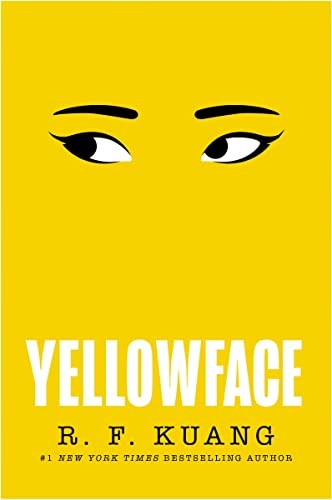
- Yellowface by R.F. Kuang — who gets to tell which stories and what happens when someone steals the pen, played as literary satire with real venom. Yellowface discussion guide.
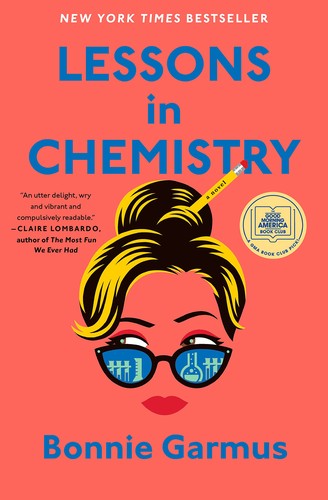
- Lessons in Chemistry by Bonnie Garmus — a woman whose brilliance keeps getting credited to the men around her, told with fury and dark comedy. Lessons in Chemistry discussion guide.
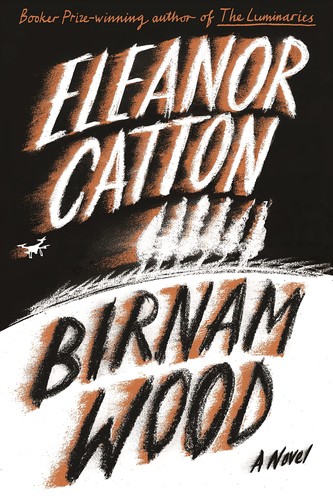
- Birnam Wood by Eleanor Catton — idealism, compromise, and the moment a collective lets the wrong kind of money in. Birnam Wood discussion guide.
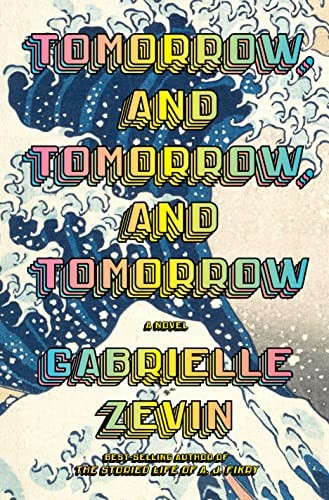
- Tomorrow, and Tomorrow, and Tomorrow by Gabrielle Zevin — creative partnership, narrative ownership, and the question of who gets to define a shared history. Tomorrow, and Tomorrow, and Tomorrow discussion guide.
Read Trust with neighbours in a Mutuals circle. Learn how to run a great reading-circle discussion. Explore more literary fiction picks for book clubs.
About Mutuals
Mutuals matches you with a handful of neighbours whose reading taste overlaps with yours into a local reading circle close to home: monthly meetups, no app fatigue. Free to sign up; you only pay $15 if a circle actually forms around you. If you want to read Trust with people who live nearby, that’s literally what we do.
Imagine reading Trust with a handful of neighbours who love it too. mutuals matches you with local readers who share your taste. Free to join, and just $15 on the day your circle forms.
Match with neighboursMore guides like this
From the blog
Discussion guide by the mutuals team. Questions are original.
More book guides