Birnam Wood Discussion Questions & Book Club Guide
by Eleanor Catton
Want to read Birnam Wood with a few people nearby?
About Birnam Wood
Birnam Wood is a guerrilla gardening collective in New Zealand that plants crops on unused land — no permission, no profit motive, just food. When American billionaire Robert Lemoine offers them a remote farm in the South Island as a base of operations, the collective’s founder Mira sees a chance to scale everything they’ve built. Her old friend Tony sees a trap. Eleanor Catton — who won the Booker at twenty-eight for The Luminaries — wrote a literary thriller about what happens when activist idealism meets the kind of money that has no intention of being accountable. The Macbeth parallels are structural, not decorative: ambition, false prophecy, a wood that moves. The pacing shifts from slow-burn political novel to something far more violent in the final act. Book clubs should know going in that this is the rare literary thriller where you genuinely don’t know who will survive, and the ending will either devastate or infuriate you — most tables split on which.
Discussion questions for Birnam Wood
Mira accepts Lemoine’s offer because she believes the collective can take his money and still keep its values. Is she being pragmatic or compromised — and is there a meaningful difference?
Tony is the skeptic who sees through Lemoine from the start, and the narrative proves him right. Does the novel reward his suspicion or punish him for it — and did you find him sympathetic or insufferable?
Lemoine is charming, generous, and a genuine threat. Where does he fall on the spectrum of literary villains — is he a sociopath, a system, or just capitalism working exactly as designed?
The title references Macbeth directly, and Catton threads the parallels throughout. Which Macbeth echo landed hardest for you, and did the Shakespeare structure feel like scaffolding or constraint?
The collective argues constantly about whether to stay pure or accept compromise. Is the novel saying that activist purity is admirable, naive, or a luxury only people without power can afford?
Catton spends the first two-thirds building character and politics, then detonates the final act. Did the shift in pacing feel earned or jarring — and did the literary novel or the thriller win?
The ending is sudden and brutal. Without spoiling specifics for anyone who hasn’t finished, did it feel like the logical conclusion of everything the book set up, or did it feel like Catton pulling the rug?
Surveillance runs through the novel at every level — Lemoine’s technology, social media exposure, characters watching each other. What is Catton saying about privacy in a world where someone always has the better camera?
Mira and Tony’s friendship fractures over Lemoine. Is their conflict really about him, or was the break already there — and does the book suggest that political disagreement between friends is survivable?
Shelley is the collective’s newest and most idealistic member. What role does her perspective play in the novel — is she the conscience, the naivete, or the generation that inherits the mess?
Was the collective’s idealism ever viable, or does the novel argue that any project operating outside the system will eventually be absorbed or destroyed by it?
Catton is a New Zealander writing about the collision of local activism and American capital. How does the novel’s setting shape its politics — and would this story work if it were set somewhere else?
Themes in Birnam Wood
Idealism and its vulnerability to capital
The collective wants to do good work on its own terms. Lemoine offers the resources to do that work ten times faster. The catch is invisible at first and fatal by the end. Catton’s argument isn’t that idealists are foolish — it’s that capital is patient, flexible, and perfectly willing to wear the language of justice while dismantling the thing it claims to support. The novel traces exactly how money doesn’t just corrupt an organisation; it reorganises the organisation’s self-understanding until compromise feels like strategy.
Surveillance and the end of privacy
Lemoine’s wealth buys him the ability to watch everyone and be watched by no one. Catton extends this asymmetry past the personal — the novel suggests that surveillance isn’t a tool powerful people use but a condition they create, one where the watched can never organise effectively because they can never be sure they’re unobserved. For a book club, the question is whether the novel’s paranoia feels prophetic or already out of date.
The Macbeth structure
The parallels are deliberate and load-bearing. Ambition disguised as opportunity. A prophecy — Lemoine’s promise — that seems to guarantee success. An escalation that moves from moral compromise to actual violence. A wood that comes to Dunsinane. Catton doesn’t retell Macbeth so much as use its architecture to argue that the pattern of ambition, complicity, and collapse is not historical but permanent. The tragedy isn’t that the characters make bad choices; it’s that the structure was always going to produce this ending.
Environmentalism as a movement money can buy
The collective plants food on land nobody is using. Lemoine extracts rare minerals from land he bought specifically to keep people off it. Catton sets these two relationships to land side by side and watches the collision. The novel asks whether environmentalism — once it needs funding, scale, and infrastructure — can remain a challenge to capitalism or whether it inevitably becomes another market for capitalism to serve. The answer the book gives is not comforting.
Suggested book club format
- Length: 432 pages, roughly nine to ten hours of reading.
- Session count: Two sessions recommended. Break around Part Three — the first session covers the political novel and the slow tightening of Lemoine’s involvement; the second covers the thriller that detonates out of it. This structure lets the first session end on tension and the second session deal with the fallout.
- Icebreaker: “Have you ever taken help from someone whose motives you didn’t fully trust — and did it work out?”
- Moderator note: The final act contains sudden, graphic violence that arrives with very little warning after hundreds of pages of character-driven literary fiction. The tonal shift is deliberate but can be genuinely shocking. Flag this for the group before they start reading, especially for members who are sensitive to depictions of violence. The ending is bleak and does not offer resolution or comfort — prepare for strong reactions and give the table time to sit with it rather than rushing to interpret.
How a real club read this
Share how your club discussed Birnam Wood — tell us about your reading circle.
More books like Birnam Wood
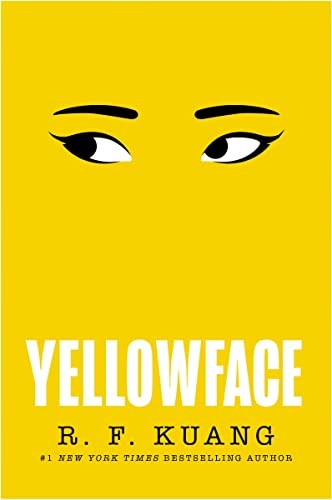
- Yellowface by R.F. Kuang — ambition, theft, and the machinery of an industry that rewards exactly the wrong behaviour, told as literary satire with a protagonist you can’t stop watching. Yellowface discussion guide.
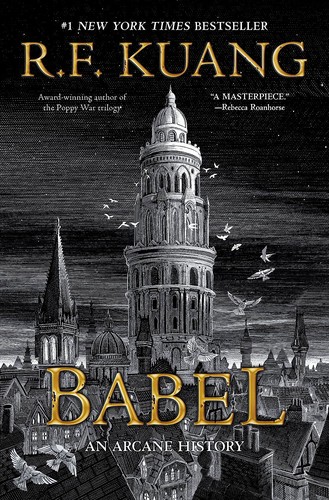
- Babel by R.F. Kuang — idealism, complicity, and the moment a gifted outsider realises the institution that elevated them is the engine of the thing they oppose. Babel discussion guide.
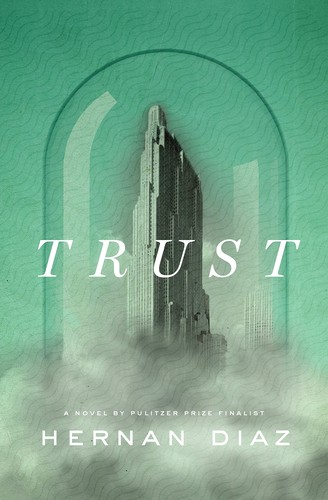
- Trust by Hernan Diaz — wealth, narrative control, and the discovery that the person funding the project is also the person rewriting the story. Trust discussion guide.
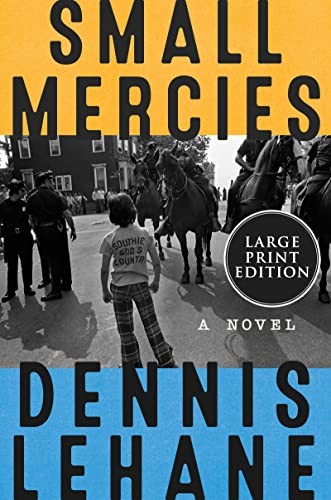
- Small Mercies by Dennis Lehane — a community’s loyalties tested by outside pressure, told as a thriller that refuses to let its characters off the hook. Small Mercies discussion guide.
Read Birnam Wood with neighbours in a Mutuals circle. Learn how to run a great reading-circle discussion. Explore more literary fiction picks for book clubs.
About Mutuals
Mutuals matches you with a handful of neighbours whose reading taste overlaps with yours into a local reading circle close to home: monthly meetups, no app fatigue. Free to sign up; you only pay $15 if a circle actually forms around you. If you want to read Birnam Wood with people who live nearby and argue about whether Mira should have taken the deal, that’s literally what we do.
Imagine reading Birnam Wood with a handful of neighbours who love it too. mutuals matches you with local readers who share your taste. Free to join, and just $15 on the day your circle forms.
Match with neighboursMore guides like this
From the blog
Discussion guide by the mutuals team. Questions are original.
More book guides