Yellowface Discussion Questions & Book Club Guide
by R.F. Kuang
Want to read Yellowface with a few people nearby?
About Yellowface
June Hayward watches her college friend Athena Liu — literary prodigy, critical darling, effortlessly successful — choke to death in a freak accident during a night of drinking. In the shock that follows, June takes Athena’s unpublished manuscript about Chinese labourers in World War I, rewrites it just enough to call it her own, and publishes it under a racially ambiguous pen name. R.F. Kuang’s 2023 satire follows June’s escalating lies, paranoia, and baroque self-justification as the publishing industry celebrates her stolen work and the internet starts closing in. The novel is written entirely from June’s perspective, which means the reader is trapped inside a mind that never stops rationalizing. Book clubs fight over this one because some readers sympathize with June far longer than they’re comfortable admitting — and the moment they stop is different for everyone in the room.
Discussion questions for Yellowface
At what exact point did June cross from opportunist to villain for you — and did anyone in your group draw that line in a different place?
June’s narration is relentlessly self-justifying. Were there moments where her rationalizations almost convinced you, and what does that say about how first-person perspective manipulates a reader?
Kuang gives June real grievances — she works hard, gets ignored, watches less talented people succeed on connections. Is the novel fair to June’s frustration, or does it set her up only to tear her down?
Athena is brilliant but also calculating, competitive, and arguably exploitative of her own heritage. Does the novel want you to see her as a victim, a mirror of June, or something more complicated?
The publishing industry in this book rewards exactly the wrong behaviour at every turn. Which specific industry critique landed hardest for you, and did any of it feel exaggerated?
June argues that stories belong to whoever tells them best, not whoever lived them. Where do you personally draw the line between cultural exchange and cultural appropriation — and did the novel shift that line at all?
Social media functions as both detective and executioner in the book. Does Kuang portray the online mob as justified, dangerous, or both? Did your sympathy for June increase or decrease when the internet came for her?
June’s editor, agent, and publisher all benefit from the fraud. How much responsibility does the system bear versus the individual — and does the book let the industry off too easily?
Race is the axis the entire plot turns on, yet June spends the book insisting race shouldn’t matter. How does Kuang use June’s colour-blindness rhetoric to expose what colour-blindness actually protects?
The novel is a satire, but it’s also a thriller. Did the tension of June getting caught keep you reading more than the ideas did — and is that a problem or a feature of the book’s design?
Kuang herself is a young woman of colour who became very successful very fast. How much of the novel reads as autobiography, how much as warning, and does it matter?
June never fully faces consequences in the way a morality tale would demand. Did you find the ending satisfying, infuriating, or honest — and what does your reaction reveal about what you wanted from the book?
If you could hear Athena’s version of every event in this novel, which scene would change the most?
Themes in Yellowface
The self-delusion of the mediocre
June is not untalented — she’s adequate. The novel’s sharpest knife is the portrait of someone who can see excellence clearly enough to recognize it in others but not produce it herself. June’s theft isn’t impulsive; it’s the logical endpoint of years spent watching someone else get what she believes she deserves. Kuang suggests that mediocrity isn’t passive — it’s a condition that generates its own ruthless energy.
Who gets to tell which stories
The book sets up the appropriation question and then refuses to give a clean answer. June’s version of Athena’s manuscript sells better partly because June strips out the nuance a Chinese American writer would have kept. The market rewards the flattened version, which implicates readers and publishers as much as it does June. Kuang is less interested in drawing a bright line than in showing how many people profit from the line staying blurry.
Envy as the engine of a career
Jealousy in this novel isn’t a side emotion — it’s the fuel. June’s entire professional life is shaped by measuring herself against Athena, and even after Athena dies, the comparison doesn’t stop. Kuang treats envy not as a flaw to overcome but as a structural feature of an industry that ranks writers publicly, constantly, and mercilessly. The book asks whether any creative career can survive that much comparison without curdling.
The publishing industry as its own satire
Kuang writes the industry from the inside with a precision that keeps tipping into absurdity — sensitivity readers hired for optics, diversity panels that perform inclusion while practising exclusion, editors who care about the identity of the author only when it’s marketable. The satire works because none of it feels invented. The industry emerges as a machine that monetizes the very conversations about justice it claims to be having.
Suggested book club format
- Length: 336 pages, roughly five to six hours of reading.
- Session count: One session is enough. The book moves fast and most groups will want to argue about it in a single, unbroken conversation.
- Icebreaker: “Have you ever gotten credit for something you didn’t fully deserve — and did you correct the record or let it ride?”
- Moderator note: This novel handles race and cultural appropriation directly and from the perspective of the person doing the appropriating. Set ground rules early: make space for readers of colour to speak first on questions about representation, acknowledge that the book is designed to make everyone uncomfortable, and agree that discomfort is the point rather than something to resolve quickly. If your group is mostly white, name that openly — the conversation will be better for it.
How a real club read this
Share how your club discussed Yellowface — tell us about your reading circle.
More books like Yellowface
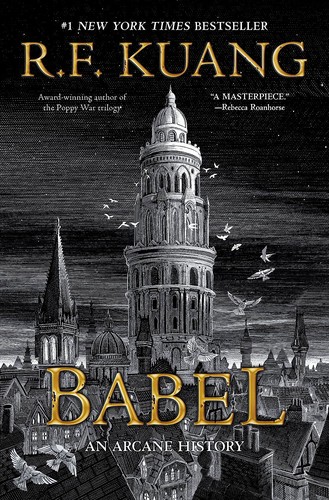
- Babel by R.F. Kuang — empire, translation, and who profits from other people’s languages, told as dark academia with revolutionary teeth. Babel discussion guide.
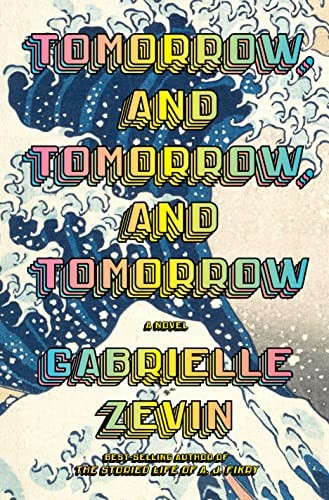
- Tomorrow, and Tomorrow, and Tomorrow by Gabrielle Zevin — creative partnership, stolen credit, and the question of who owns a shared idea. Tomorrow, and Tomorrow, and Tomorrow discussion guide.
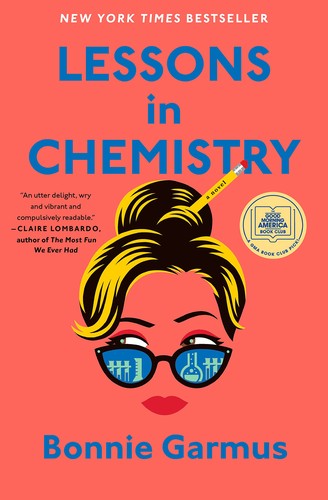
- Lessons in Chemistry by Bonnie Garmus — a woman whose work keeps getting credited to men, played as comedy until it isn’t. Lessons in Chemistry discussion guide.
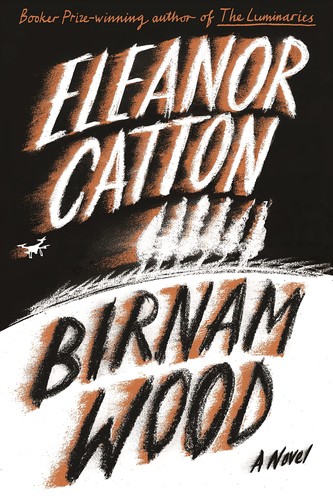
- Birnam Wood by Eleanor Catton — idealism, compromise, and the moment an activist group lets the wrong person in. Birnam Wood discussion guide.
Read Yellowface with neighbours in a Mutuals circle. Learn how to run a great reading-circle discussion. Explore more literary fiction picks for book clubs.
About Mutuals
Mutuals matches you with a handful of neighbours whose reading taste overlaps with yours into a local reading circle close to home: monthly meetups, no app fatigue. Free to sign up; you only pay $15 if a circle actually forms around you. If you want to read Yellowface with people who live nearby, that’s literally what we do.
Imagine reading Yellowface with a handful of neighbours who love it too. mutuals matches you with local readers who share your taste. Free to join, and just $15 on the day your circle forms.
Match with neighboursMore guides like this
From the blog
Discussion guide by the mutuals team. Questions are original.
More book guides