Small Mercies Discussion Questions & Book Club Guide
by Dennis Lehane
Want to read Small Mercies with a few people nearby?
About Small Mercies
Summer 1974, South Boston. Mary Pat Fennessy’s teenage daughter Jules goes missing the same night a young Black man is found dead near a bus stop, weeks before court-ordered busing is set to desegregate Boston’s public schools. Dennis Lehane — who grew up in Dorchester, a few neighborhoods over — writes a thriller about a working-class Irish mother whose ferocity in searching for her daughter is indistinguishable from the racism that runs through her community like a load-bearing wall. Mary Pat is not on a journey toward enlightenment. The book does not offer her redemption, and Lehane never asks you to forgive her, only to understand what built her. It is a crime novel in the same way that Mystic River is a crime novel: the crime is the excuse, and the neighborhood is the subject. Book clubs should know going in that Mary Pat is the most polarizing protagonist most groups will encounter this year — she will split the table, and that’s the point.
Discussion questions for Small Mercies
Mary Pat is both the character you root for and the character who espouses views the book clearly condemns. How does Lehane manage that tension — and did you find yourself sympathizing with her more than you expected, or less?
The busing crisis is the historical backdrop, but it also functions as the pressure that makes every character’s worst instincts visible. Is the novel using the crisis as context for the story, or is it arguing that the crisis is the story?
Lehane has said he deliberately refused to give Mary Pat a redemption arc. What does the book gain by that refusal, and what does it lose? Would a moment of genuine racial reckoning have felt earned or sentimental?
Rum Collins and the neighborhood power structure operate through loyalty, silence, and threat. How does the novel portray the difference between community and control — and at what point does one become the other?
Jules’s disappearance drives the plot, but we spend relatively little time with Jules herself. What does her absence do structurally, and does the book ask you to care about Jules as a person or as a catalyst for Mary Pat’s unraveling?
Bobby Coyne represents the law, but he’s also navigating the same neighborhood codes Mary Pat is. Did you read him as a genuine counterweight to the world Mary Pat inhabits, or as another version of the same compromises?
The novel depicts South Boston’s Irish working-class community with obvious affection for its textures — the bars, the stoops, the loyalty — while simultaneously indicting what that loyalty protects. Is the book fair to its working-class characters, or does it use them to make a point about racism that a more affluent setting would complicate?
Several characters justify violence by framing it as protection of home and family. How does Lehane distinguish between violence as survival and violence as ideology — or does he argue there’s no clean line?
Mary Pat’s relationship with her dead son Noel haunts the book. How does grief interact with her racism — does losing Noel make her more dangerous, more sympathetic, or both?
Lehane grew up in the neighborhoods adjacent to Southie during this period. Does that proximity give the novel authority it wouldn’t otherwise have, or does the question of who gets to tell this story matter less than how it’s told?
The ending does not resolve neatly. Without spoiling specifics, did you read the final pages as justice, tragedy, inevitability, or something else entirely — and does Mary Pat get what she deserves?
If you had to place this book on a spectrum between “explains racism” and “depicts racism without explaining it,” where would it land — and which approach do you think is more useful for a book club conversation?
Themes in Small Mercies
Racism as community identity
In Lehane’s Southie, racism isn’t a private belief — it’s the civic religion. Opposition to busing isn’t framed as policy disagreement; it’s framed as neighborhood defense, which makes it indistinguishable from love of home. The novel’s sharpest move is showing how Mary Pat’s racism doesn’t come from ignorance. She knows exactly what she believes and why, and the community she belongs to reinforces it at every level — the bar, the parish, the street corner, the family kitchen. The book forces a question most fiction about racism avoids: what do you do with a character whose bigotry is not a flaw in her worldview but the foundation of it?
Motherhood weaponized
Mary Pat’s ferocity as a mother is the engine of the plot and the source of the book’s moral discomfort. Lehane writes maternal love not as a softening force but as an accelerant — the further Mary Pat goes to find Jules, the more damage she does, and she never once questions whether the damage is justified. The novel asks whether motherhood, elevated to the status of ultimate virtue, can become a licence for anything. Every terrible thing Mary Pat does, she does for her children, and the book refuses to let that motive redeem the action.
The mythology of the working-class neighborhood
Southie in this novel is a place that has built a story about itself — tight-knit, loyal, unbreakable — and that story is both real and lethal. Lehane knows these streets well enough to write their warmth without sentimentality and their violence without condescension. The mythology of the neighborhood is what keeps people in line: you don’t talk to outsiders, you don’t cross the people who run the block, you don’t question what the community has decided is true. The book suggests that the most dangerous thing about a close-knit community is how easily closeness becomes coercion.
Violence as the only language the system taught
Nearly every character in the novel resorts to violence not because they are evil but because it is the only tool the world gave them. Mary Pat learned it from a husband who beat her, from a neighborhood that enforced its codes with fists and worse, from a city that answered Black families’ desire for equal education with bricks and bats. Lehane traces the supply chain of violence the way Kingsolver traces the supply chain of opioids in Demon Copperhead — upstream, past the individual act, to the structures that made it inevitable.
Suggested book club format
- Length: 336 pages, roughly six to seven hours of reading.
- Session count: One session is sufficient. The book moves fast and reads like the thriller it structurally is — most club members will finish it in a weekend. If your group runs long on discussion, consider setting aside two and a half hours rather than the usual ninety minutes; Mary Pat generates arguments that don’t resolve quickly.
- Icebreaker: “What’s a belief or loyalty from the place you grew up that you held without questioning until something forced you to look at it?”
- Moderator note: This novel depicts extreme racial violence, racial slurs used frequently and in full, homophobia, domestic abuse, and murder — all rendered graphically and without the narrative distance that historical fiction sometimes provides. Lehane writes from inside the community perpetrating the violence, which means the book’s sympathies can feel uncomfortably close to its worst characters. Name this at the start. Some readers — particularly Black readers and readers of colour — may experience the relentless slurs and violence as exhausting rather than illuminating; make space for that reaction and don’t require anyone to defend the book’s choices.
How a real club read this
Share how your club discussed Small Mercies — tell us about your reading circle.
More books like Small Mercies
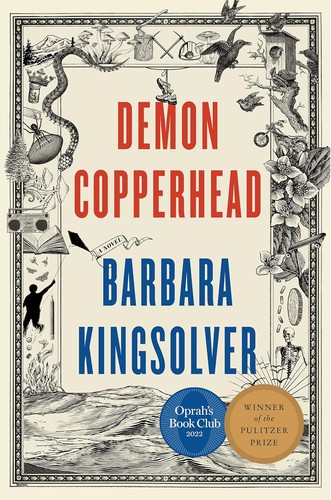
- Demon Copperhead by Barbara Kingsolver — another unflinching portrait of a community failed by every institution that was supposed to help, told with the same refusal to let poverty or geography excuse what people do to each other. Demon Copperhead discussion guide.
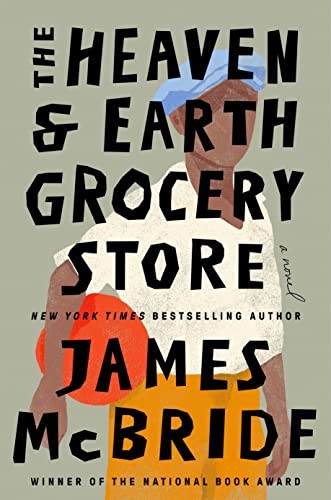
- The Heaven & Earth Grocery Store by James McBride — where Lehane writes a neighborhood eating itself from the inside, McBride writes one holding itself together against the outside. Same era of American racism, opposite emotional trajectory. The Heaven & Earth Grocery Store discussion guide.
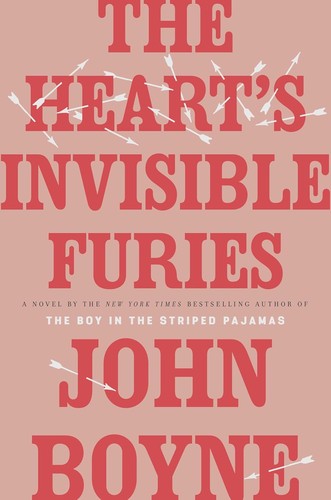
- The Heart’s Invisible Furies by John Boyne — a life-spanning Irish novel about what happens when the community that raised you is also the one that rejects you. Shares Small Mercies’ interest in loyalty, violence, and the cost of belonging. The Heart’s Invisible Furies discussion guide.
- Horse by Geraldine Brooks — two timelines, one nineteenth-century and one contemporary, tracing how American racism attaches itself to everything, even a racehorse. Brooks and Lehane share a conviction that the past isn’t backstory — it’s still happening. Horse discussion guide.
Read Small Mercies with neighbours in a Mutuals circle. Learn how to run a great reading-circle discussion. Explore more crime fiction picks for book clubs.
About Mutuals
Mutuals matches you with a handful of neighbours whose reading taste overlaps with yours into a local reading circle close to home: monthly meetups, no app fatigue. Free to sign up; you only pay $15 if a circle actually forms around you. If you want to read Small Mercies with people who live nearby and argue about whether Mary Pat deserves your sympathy, that’s literally what we do.
Imagine reading Small Mercies with a handful of neighbours who love it too. mutuals matches you with local readers who share your taste. Free to join, and just $15 on the day your circle forms.
Match with neighboursMore guides like this
From the blog
Discussion guide by the mutuals team. Questions are original.
More book guides