Educated Discussion Questions & Book Club Guide
by Tara Westover
Want to read Educated with a few people nearby?
About Educated
Tara Westover grew up in a survivalist family in rural Idaho — no birth certificate, no school, no doctor’s office. Her father, driven by paranoia and fundamentalist belief, kept the family isolated from every institution the rest of the country takes for granted. After teaching herself enough to pass the ACT, she got into BYU, then Cambridge, then Harvard. But the memoir is not a triumph-of-education story. It is about what it costs to educate yourself out of the life you were given — and whether that means losing every person who raised you. Westover writes with a precision that makes the mountain feel both beautiful and suffocating. Book-club hook: it starts arguments about whether leaving a family is an act of courage or betrayal, and nobody finishes the conversation.
Discussion questions for Educated
Tara’s father, Gene, exhibits paranoia, hoarding, and delusional thinking that worsen over the course of the memoir. Do you read him as mentally ill, willfully dangerous, or both — and does the distinction change what the family owes him?
Shawn’s violence toward Tara escalates in plain sight. Why does the family tolerate what they can clearly see, and at what point does witnessing abuse without intervening become participation in it?
Faye, Tara’s mother, is a midwife and herbalist who builds a successful business while remaining inside Gene’s reality. How do you understand her complicity — is she a victim, a collaborator, or something the language of blame can’t quite reach?
Westover describes looking in a mirror at Cambridge and not recognizing the person staring back. What is that scene really about — and have you ever had a version of it?
The word “educated” in the title means something far larger than schooling. What does the memoir define education as, and where in the book does it make that definition explicit?
Tara’s professors — especially Dr. Kerry at BYU and Professor Steinberg at Cambridge — see something in her that she cannot yet see in herself. What does it mean that strangers recognized her capacity before her own family did?
Several of Tara’s siblings also left the mountain and got degrees. Others stayed and accepted the family’s version of events. What separates the ones who left from the ones who didn’t — and is it just chance?
The memoir relies entirely on Tara’s memory, which she admits is unreliable and sometimes contradicted by her siblings. Does that vulnerability strengthen or weaken the book’s authority?
Gene frames every outside institution — schools, hospitals, government — as a threat. Are there moments in the memoir where his distrust is not entirely irrational, and does that complicate your reading of him?
Tara describes loyalty to her family as a physical sensation, almost gravitational. What does the memoir say about the difference between loyalty and self-destruction?
After Tara’s parents reject her account of the abuse, several siblings cut contact with her. Is there a version of this story where she keeps her family and her education, or does the memoir argue that the two were always mutually exclusive?
Westover wrote this book knowing her family would read it. How does that awareness shape what she includes, what she omits, and the tone she uses — and do you think the memoir is fair?
If you could sit across from Tara Westover at a book club meeting, what single question would you ask her — and what answer would you be afraid to hear?
Themes in Educated
Education as both liberation and loss
Westover does not write education as rescue. Every degree moves her further from the people who raised her, and the memoir is honest about the grief in that distance. What she gains in understanding she pays for in belonging. The book refuses the clean version of the story where learning simply sets you free — it insists that freedom and loss arrived together and cannot be separated.
The family as a closed system
The Westover household operates like a sealed environment with its own physics. Gene sets the rules — no doctors, no school, the Illuminati are coming — and everyone inside adjusts their perception to match. Tara’s education is destabilizing precisely because it introduces a second frame of reference. The memoir treats the family not as a collection of individuals making independent choices but as a system that enforces its own coherence.
Memory and who gets to define what happened
Tara’s siblings remember the same events differently. Some deny the violence entirely; others confirm it and then recant. Westover builds the memoir around this instability, refusing to pretend she has a clean, authorized account. The result is a book that is as much about the politics of memory — who gets believed, who gets to narrate — as it is about the events themselves.
The body as evidence
Tara and her siblings suffer burns, falls, car crashes, and beatings that go medically untreated. The body accumulates damage that the family’s ideology cannot explain away. Westover writes these injuries with clinical specificity, and they function as a counter-narrative to Gene’s insistence that everything is fine. The flesh remembers what the family agrees to forget.
Leaving and what you cannot bring with you
The memoir’s final movement is an accounting of what Tara carried out of Idaho and what she left behind. She kept the work ethic, the intellectual hunger, and certain memories of the mountain at its most beautiful. She lost daily contact with her parents, the unquestioned sense of home, and the version of herself that never doubted she belonged. Westover does not pretend the trade was clean or painless.
Suggested book club format
- Length: 352 pages, roughly seven to eight hours of reading.
- Session count: One session works if your group reads quickly; two is more comfortable. If splitting, break after Part Two (around page 195, when Tara first arrives at BYU). The first session covers the mountain and the family’s closed world; the second covers what education opens — and what it breaks.
- Icebreaker: “What’s a belief you grew up with — about the world, about your family, about yourself — that you’ve since revised? And what replaced it?”
- Moderator note: This memoir depicts domestic violence, untreated traumatic injuries, psychological abuse, and coercive family dynamics with direct, specific detail. Tara describes being choked, dragged, and gaslit by a sibling while family members watch. Flag these topics before your session begins and check in during discussion. Some readers with family-of-origin trauma will find this book activating in ways that don’t always surface immediately.
How a real club read this
Share how your club discussed Educated — tell us about your reading circle.
More books like Educated
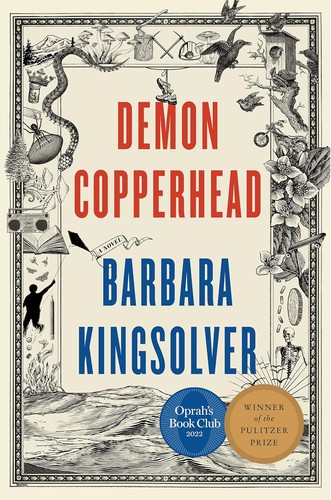
- Demon Copperhead by Barbara Kingsolver — a Dickensian novel about poverty, addiction, and survival in Appalachia that shares Educated’s central question: what do you owe the place that raised you and failed you? Demon Copperhead discussion guide.
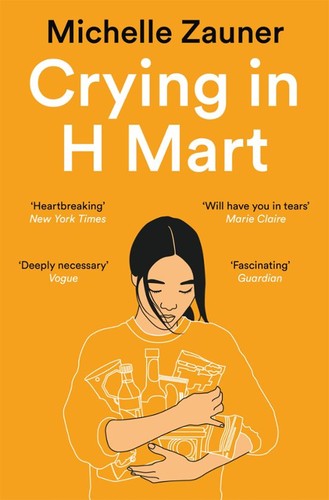
- Crying in H Mart by Michelle Zauner — a memoir about grief, food, and Korean American identity that explores how the body holds what language cannot, much as Westover’s injuries carry the family’s unspoken truth. Crying in H Mart discussion guide.
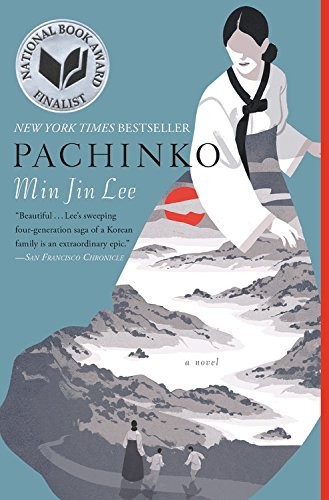
- Pachinko by Min Jin Lee — four generations of a Korean family in Japan, navigating identity, sacrifice, and the cost of belonging across a timeline that makes the personal feel historical. Pachinko discussion guide.
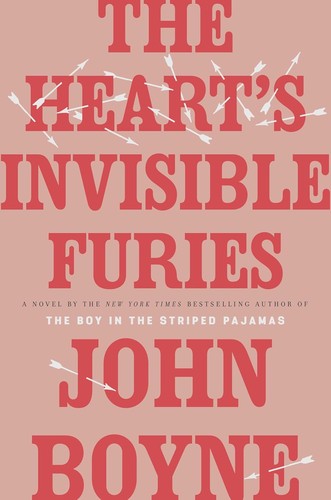
- The Heart’s Invisible Furies by John Boyne — one man’s life across six decades of Ireland, where the family you’re born into and the one you build for yourself are rarely the same thing. The Heart’s Invisible Furies discussion guide.
Read Educated with neighbours in a Mutuals circle. Learn how to run a great reading-circle discussion. Explore more memoir picks for book clubs.
About Mutuals
Mutuals matches you with a handful of neighbours whose reading taste overlaps with yours into a local reading circle close to home: monthly meetups, no app fatigue. Free to sign up; you only pay $15 if a circle actually forms around you. If you want to read Educated with people who live nearby and argue about whether Tara owed her family more patience or less, that’s literally what we do.
Imagine reading Educated with a handful of neighbours who love it too. mutuals matches you with local readers who share your taste. Free to join, and just $15 on the day your circle forms.
Match with neighboursMore guides like this
From the blog
Discussion guide by the mutuals team. Questions are original.
More book guides