Fourth Wing Discussion Questions & Book Club Guide
by Rebecca Yarros
Want to read Fourth Wing with a few people nearby?
About Fourth Wing
Twenty-year-old Violet Sorrengail was supposed to enter the Scribe Quadrant and live a quiet life among books. Instead, her mother — a decorated general — forces her into Basgiath War College’s Riders Quadrant, where cadets either bond with a dragon or die on the parapet. Violet’s body is fragile, her classmates want her dead, and the most dangerous rider in her year might also be the person she’s most drawn to. Yarros wrote a 500-page book that moves like it’s 200 — the pacing is ruthless and the world-building drops you mid-war with no safety net. Book clubs love it because it splits rooms: half the table will defend the romance, the other half wants to argue about the military politics, and everyone has an opinion about that ending.
Discussion questions for Fourth Wing
Violet’s mother sends her into a program with a known fatality rate instead of the career Violet actually wanted. Is Lilith protecting her daughter or sacrificing her? Does your answer change by the end of the book?
The parapet crossing kills cadets before they even enter the school. What does it mean that the leadership considers this acceptable? Is Basgiath a meritocracy or just a meat grinder with good PR?
Xaden is introduced as someone Violet has every reason to fear. At what point did you start trusting him — or did you never fully get there?
Violet has a chronic condition that her classmates see as weakness. How does Yarros handle disability in a world designed to kill anyone who can’t keep up? Does the book earn its treatment of Violet’s body, or does it sidestep the harder parts?
Dain has known Violet her whole life and genuinely believes he’s protecting her. Why does “I know what’s best for you” curdle so fast in this book — and does Dain get a fair shake from the narrative?
The dragons choose their riders, not the other way around. What does Tairn’s choice of Violet tell us — and what does Andarna’s presence add that Tairn alone wouldn’t?
Yarros keeps major world-building secrets from the reader for most of the book. Did the late reveals feel earned, or did you feel manipulated by the withholding?
The war college setting borrows from real military training structures — hazing, chain of command, kill-or-be-killed pressure. Does romanticizing that structure bother you, or is the fantasy context enough distance?
Violet and Xaden’s relationship develops under extreme duress. Can trust built in survival conditions transfer to peacetime, or is their bond only legible inside a war?
The rebellion kids are punished for their parents’ choices. How does the book handle inherited guilt — and does it push that idea far enough?
Compare Violet at the parapet to Violet in the final battle. What did she actually gain at Basgiath — skill, cruelty, pragmatism, or something else?
The cliffhanger ending reframes almost everything that came before. Without spoiling specifics for anyone reading ahead: did the reveal make you more invested or more suspicious of the story’s reliability?
Who in your group would survive the Riders Quadrant, and who would have quietly walked to the Scribe Quadrant on day one? Be honest.
Fourth Wing sold millions of copies in its first year. What does this book tap into that readers were clearly hungry for?
Themes in Fourth Wing
Survival as identity
Violet doesn’t enter Basgiath to become a warrior — she enters to not die. But survival reshapes her. By the midpoint she’s making tactical calculations that would have horrified her earlier self. Yarros tracks how prolonged danger doesn’t just test character; it builds a new one on top of the old, and not always an improvement.
Trust under coercion
Every relationship at Basgiath forms under threat. Violet can’t know whether Xaden’s loyalty is real or strategic, and neither can we. The book treats trust not as a binary but as a bet you keep placing with incomplete information — which mirrors how trust actually works, just compressed into dragon-school stakes.
Bodies that don’t fit the system
Violet’s joint condition means the institution wasn’t built for her, and nobody modified it. She adapts, but the book is clear-eyed that adaptation costs something. The physical toll isn’t hand-waved — Yarros returns to it in combat, in training, in the small logistics of staying upright when the system assumes everyone is built the same.
Found family vs. inherited loyalty
The squad structure at Basgiath forces strangers into dependence. Violet’s actual family — her mother, her dead brother’s legacy — gives her status but not safety. The people who keep her alive are the ones she chose under fire, and the book argues that bonds forged in crisis are at least as real as blood.
Secrets as structural power
Who knows what, and when, drives the entire plot. Information is currency at Basgiath — the leadership hoards it, Xaden trades in it, and Violet’s arc is partly about learning that the people with the most secrets aren’t always the enemy. The book treats opacity as a feature of power, not a bug.
Suggested book club format
- Length: 528 pages, roughly eight to ten hours of reading. It moves fast once you’re past the first 80 pages.
- Session count: Two sessions work best. Break after Chapter 24 (the Threshing) — it’s a natural act break and gives the first session a complete arc to discuss.
- Icebreaker: “You’re standing on the parapet. What’s the one skill or personality trait that gets you across?”
- Moderator note: The book contains on-page violence, character death, and a sexual relationship that develops under power imbalance. If your group skews younger or prefers content heads-ups, flag those elements at the start rather than mid-conversation.
How a real club read this
Share how your club discussed Fourth Wing — tell us about your reading circle.
More books like Fourth Wing
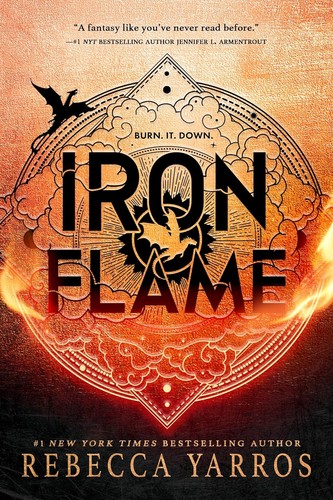
- Iron Flame by Rebecca Yarros — the sequel doubles down on the political conspiracy and splits Violet’s loyalties in half. Iron Flame discussion guide.
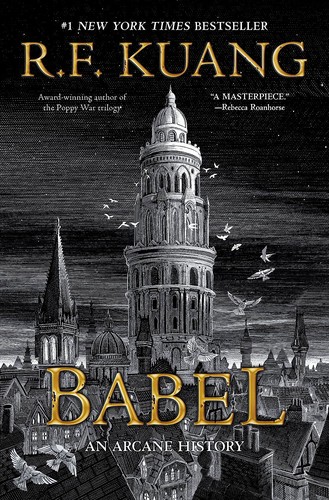
- Babel by R.F. Kuang — if you want the academic-institution-as-war-machine idea taken dead seriously, with colonialism replacing dragons. Babel discussion guide.
- The House in the Cerulean Sea by TJ Klune — the gentlest possible counterpoint: found family without anyone dying on a parapet.
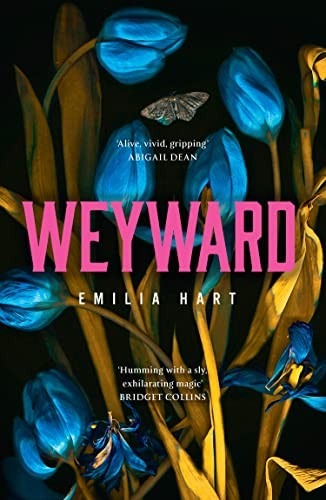
- Weyward by Emilia Hart — women and their connections to wild, dangerous things, told across three timelines with actual teeth. Weyward discussion guide.
Read Fourth Wing with neighbours in a Mutuals circle. Learn how to run a great reading-circle discussion. Explore more romantasy picks for book clubs.
About Mutuals
Mutuals matches you with a handful of neighbours whose reading taste overlaps with yours into a local reading circle close to home: monthly meetups, no app fatigue. Free to sign up; you only pay $15 if a circle actually forms around you. If you want to read Fourth Wing with people who live nearby and argue about whether Xaden is trustworthy over coffee, that’s exactly what we built for.
Imagine reading Fourth Wing with a handful of neighbours who love it too. mutuals matches you with local readers who share your taste. Free to join, and just $15 on the day your circle forms.
Match with neighboursMore guides like this
From the blog
Discussion guide by the mutuals team. Questions are original.
More book guides