Iron Flame Discussion Questions & Book Club Guide
by Rebecca Yarros
Want to read Iron Flame with a few people nearby?
About Iron Flame
Violet Sorrengail survived her first year at Basgiath War College. She bonded two dragons, killed her enemies, and fell for Xaden Riorson. But the real threat was never inside the school — it was everything the leadership was hiding beyond the wards. In this 640-page sequel to Fourth Wing, Violet learns the venin are real, Navarre’s government has been lying to its citizens for generations, and Xaden has been keeping secrets that make their already fragile trust buckle under the weight. The scope detonates: this isn’t a school story anymore, it’s a war novel with a revolution bolted on. Yarros shifts the center of gravity from romance to political thriller, and book clubs that came for the dragons tend to stay for the arguments about whether any institution deserves loyalty once you’ve seen what it’s covering up.
Discussion questions for Iron Flame
Fourth Wing reads like a survival romance; Iron Flame reads closer to a political thriller. Did the tonal shift work for you, or did you miss the tighter focus of the first book?
Xaden’s secrets are the engine of the plot and the relationship tension. At what point — if any — did his reasons stop justifying the withholding? Is there a version of those secrets that preserves trust, or is secrecy always corrosive?
Violet spends much of this book learning that Navarre’s leadership has systematically lied to its people. How does the book portray institutional deception — as a failure of specific leaders or as something built into how power sustains itself?
Violet moves from being a soldier following orders to someone who has to decide which orders are worth following. Where do you see the shift happen, and what does it cost her?
The new characters at Aretia expand the cast significantly. Who landed for you, who felt underdeveloped, and did the larger ensemble strengthen or dilute the story?
The venin mythology deepens considerably in this book. Does Yarros build a threat that feels genuinely dangerous, or do the venin work better as metaphor than as antagonists on the page?
Violet and Xaden’s relationship operates under constant surveillance and mutual suspicion for most of the book. Can a relationship grow when both people are strategically managing information — or does that dynamic just produce two people who are very good at performing intimacy?
The book argues that knowing the truth is expensive — it isolates you, makes you a target, and forces impossible choices. Is there a point where Violet would have been better off not knowing, or does the novel close that door entirely?
Navarre’s wards protect the population but require a cost the leadership hides. How does this map onto real-world trade-offs between security and transparency? Did you find the allegory effective or heavy-handed?
Several characters switch allegiances across the book. Which betrayal hit hardest for you, and did any of the loyalty shifts feel insufficiently earned?
Compare the Violet who walked onto the parapet in Fourth Wing with the Violet making command decisions by the end of Iron Flame. Is she a better person, a harder person, or just a more dangerous one?
The ending drops revelations that reframe both Xaden’s arc and the series’ trajectory. Did that final sequence earn its shock, or did it rely too heavily on withholding information the reader should have had earlier?
Iron Flame is the middle book of a series. How does it handle the classic sequel problem of needing to escalate without resolving — did it feel like a complete experience or like setup for the next instalment?
Themes in Iron Flame
Loyalty when institutions lie
Basgiath taught Violet to obey the chain of command. Iron Flame dismantles that training by showing her the chain is rotten at the top. The book’s sharpest question isn’t whether to be loyal, but what loyalty even means once you know the institution you serve has been sacrificing people to preserve its own story about itself. For book clubs, the richest conversations tend to land on how long characters hold onto institutional loyalty after the evidence turns against it — and whether that patience is virtue or denial.
The cost of knowing the truth
Violet’s arc is shaped by information she can’t un-learn. Every revelation — about the venin, about Navarre’s wards, about Xaden — narrows her options and widens her responsibility. Yarros treats knowledge not as power but as weight: the more you know, the fewer people you can talk to honestly, and the more alone you become even inside a crowd. The theme cuts both ways, because the book also shows what ignorance costs everyone else.
Revolution vs. reform
Aretia represents a faction that has decided the system can’t be fixed from inside. The leadership at Basgiath represents those who believe controlled secrecy is the price of stability. Yarros doesn’t resolve this cleanly — both sides have blood on their hands — and the book is stronger for refusing to make revolution look costless or reform look sufficient.
Love under surveillance
Violet and Xaden spend most of the book unable to fully trust each other while still being bound together by dragons, war, and something neither of them can walk away from. The romance doesn’t disappear, but it operates inside a structure where every confession could be a tactical move. Yarros uses the relationship to ask whether intimacy can survive when both people are managing what the other knows — and whether the answer matters when the alternative is facing a war alone.
Suggested book club format
- Length: 640 pages, roughly twelve to fourteen hours of reading. The pacing is uneven — the middle section is dense with world-building before the final act accelerates hard.
- Session count: Two to three sessions. If running two, break after Chapter 32 when the setting shifts to Aretia — it’s a natural turning point and gives the first session the school arc to chew on. If running three, add a break after Chapter 50 to separate the war-front escalation from the final revelations.
- Icebreaker: “You’ve just learned your government has been hiding a massive threat to keep the population calm. Do you go public, go underground, or keep your head down? No noble answers — be honest.”
- Moderator note: This book benefits enormously from the group having read Fourth Wing first. Several major discussion questions depend on the contrast between the two books. If anyone hasn’t read the first book, they’ll be swimming in unmarked spoilers from page one. Also flag that Iron Flame is heavier on violence, political betrayal, and an ending that will leave people agitated — plan buffer time after the last question.
How a real club read this
Share how your club discussed Iron Flame — tell us about your reading circle.
More books like Iron Flame
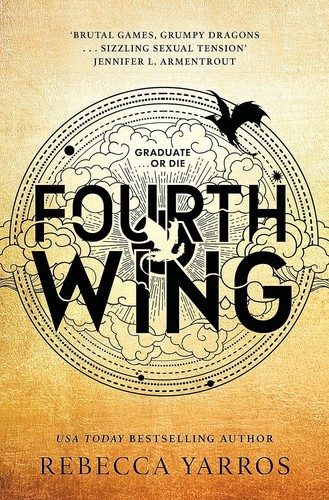
- Fourth Wing by Rebecca Yarros — the book that starts it all: dragon school, ruthless pacing, and the relationship before the secrets cracked it open. Fourth Wing discussion guide.
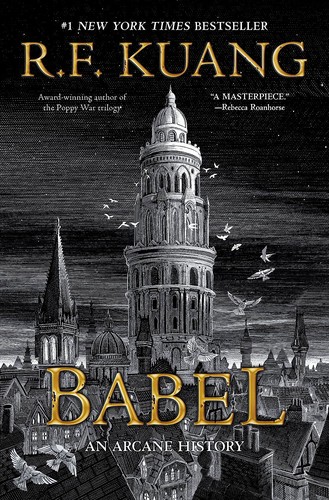
- Babel by R.F. Kuang — if Iron Flame’s institutional betrayal resonated, Kuang takes the same idea and removes the dragons, replacing them with colonialism and the violence embedded in translation. Babel discussion guide.
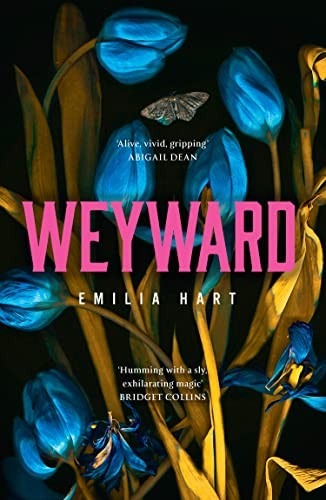
- Weyward by Emilia Hart — women connected to dangerous, wild power across three timelines, with the same refusal to make strength look polite. Weyward discussion guide.
- The House in the Cerulean Sea by TJ Klune — the warm counterweight: found family and institutional distrust, but gentler and with nobody dying on a parapet.
Read Iron Flame with neighbours in a Mutuals circle. Learn how to run a great reading-circle discussion. Explore more romantasy picks for book clubs.
About Mutuals
Mutuals matches you with a handful of neighbours whose reading taste overlaps with yours into a local reading circle close to home: monthly meetups, no app fatigue. Free to sign up; you only pay $15 if a circle actually forms around you. If you want to argue about Xaden’s choices over coffee with people who live nearby, that’s the whole point.
Imagine reading Iron Flame with a handful of neighbours who love it too. mutuals matches you with local readers who share your taste. Free to join, and just $15 on the day your circle forms.
Match with neighboursMore guides like this
From the blog
Discussion guide by the mutuals team. Questions are original.
More book guides