North Woods Discussion Questions & Book Club Guide
by Daniel Mason
Want to read North Woods with a few people nearby?
About North Woods
One house in the woods of western Massachusetts, followed across more than three hundred years of inhabitants. A pair of Puritan lovers who flee into the wilderness. A Revolutionary War deserter hiding in the cellar. Twin sisters who turn the property into an orchard. A reclusive entomologist cataloguing beetles. A true-crime writer reconstructing a murder. A painter. An opioid-era loner retreating from the world. Daniel Mason shifts literary form with each chapter — letters, field notes, verse, true crime, a real estate listing — so that the house becomes not just a setting but an argument about how stories change shape depending on who is doing the telling. The apple trees outlast everyone. For book clubs, you will argue about which chapter is the best one and whether the book is a novel or a story collection wearing a novel’s clothes.
Discussion questions for North Woods
Mason changes form with nearly every chapter — letters, verse, field notes, a real estate listing, true crime. Which shift felt most earned and which felt most like a risk, and did the formal variety pull you deeper into the book or push you out of it?
Is the protagonist of this novel the house, the land, or something else entirely? At what point, if any, did you stop looking for a human character to anchor the story?
Which inhabitant of the house stayed with you longest after you finished — and is that because of who they were, because of the form Mason gave their chapter, or because of where they fell in the sequence?
The apple trees persist across centuries, outlasting every human character. What work are the trees doing in the novel — are they a symbol, a structural device, a literal connective thread, or something Mason refuses to pin down?
A ghost moves through the book, sometimes as presence, sometimes as atmosphere. How does the supernatural element sit alongside the historical realism, and did you read the ghost as literal haunting or as a metaphor for what places remember?
Mason is a psychiatrist by training. Where, if anywhere, did you feel a clinical attention to how the mind works — in the way characters perceive their surroundings, in the structure of obsession, or in the novel’s interest in what gets remembered and what gets lost?
Several chapters center on people who came to the house to escape something — war, grief, society, their own past. Does the house offer refuge, or does it simply absorb people and outlast their reasons for arriving?
The true-crime chapter reframes earlier events through a forensic lens. Did knowing the investigative perspective was coming change how you read the chapters before it, and did the chapter’s conclusions feel reliable or limited?
Nature in this book is vivid, precisely observed, and largely indifferent to human drama. How does Mason balance the beauty of the natural world against its refusal to care about the people passing through it?
Some readers call this a novel; others call it a linked story collection. Where do you land — and does the answer change what you think the book is trying to do?
The opioid-era chapter brings the book into the present. Did the contemporary setting feel like a culmination of everything that came before, or did it sit uneasily beside the historical sections?
By the final pages, the house has outlasted every person who lived in it. What does the novel seem to believe about permanence — is it arguing that places endure while people don’t, or is it making a subtler claim about what survives?
Themes in North Woods
Place as the only permanent character
Every human inhabitant arrives, transforms the house in some small way, and leaves or dies. The land and the structure persist. Mason builds the novel around this asymmetry so that the reader eventually shifts allegiance from the people to the place itself. The house doesn’t remember its occupants in any sentimental way — it simply continues, and that continuity becomes the closest thing the novel offers to meaning. What endures is not the person but the mark they left on a wall, a garden, a cellar door.
The forms stories take when no one is listening
Each chapter adopts the literary mode its inhabitant would recognize — Puritan confession, Enlightenment field notes, Victorian verse, twentieth-century true crime. Mason’s argument is that the form of a story is never neutral; it shapes what can be said and what gets silenced. When no authoritative narrator holds the book together, the reader is left to assemble meaning from the gaps between modes, which is also how history works when no one is writing the official version.
Nature’s indifference to human drama
The beetles, the apple blossoms, the snowfall, the rot — Mason describes the natural world with a precision that never tips into sentimentality. Nature in this book is not a backdrop and not a metaphor. It is a system that operates on its own schedule, indifferent to the loves, murders, and griefs happening inside the house. The effect is humbling rather than bleak: human stories matter to humans, but the woods have their own calendar.
The house as archive
Every inhabitant leaves traces — a carved initial, a planted tree, a stain on the floor, a story that the next resident half-remembers or misreads. The house accumulates these traces the way an archive accumulates documents, without curating or interpreting them. Mason treats the building as a physical record of lives that never knew about each other, and the novel’s structure mirrors that archival logic: the reader holds all the chapters at once, seeing connections the characters never could.
Suggested book club format
- Length: 384 pages, roughly eight hours of reading.
- Session count: Two sessions recommended. Session one through the entomologist’s chapter (the Puritan lovers, the deserter, the twins, and the beetle catalogues); session two from the true-crime chapter to the end (the writer, the painter, the opioid-era recluse, and the final reckoning with the house). The tonal shifts between the first and second halves are sharp enough that a break lets the group process each mode before moving on.
- Icebreaker: “Is there a place — a house, a street, a piece of land — that held your family’s history, and what happened to it?”
- Moderator note: The chapters vary dramatically in density and pace. The verse sections and the entomologist’s field notes are slower and more demanding than the true-crime or real estate chapters. Encourage the group to sit with the tonal shifts rather than racing to a favorite. Some readers will love the experimental sections and tolerate the narrative ones; others will feel the reverse. That tension is the novel’s point, and naming it early will make the discussion richer.
How a real club read this
Share how your club discussed North Woods — tell us about your reading circle.
More books like North Woods
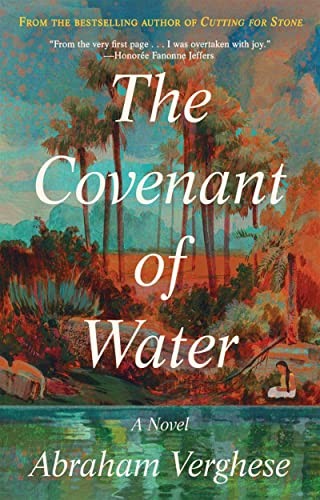
- The Covenant of Water by Abraham Verghese — three generations of a Kerala family bound by a drowning curse, told with the same multigenerational patience and the same conviction that place shapes people as much as people shape place. The Covenant of Water discussion guide.
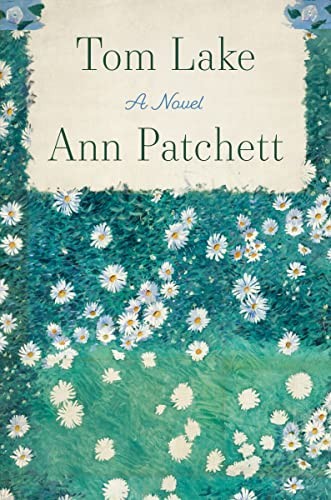
- Tom Lake by Ann Patchett — a mother tells her daughters about a long-ago summer while they pick cherries on the family farm, a quieter meditation on memory and the stories a place holds that shares Mason’s interest in how the past lives inside the present. Tom Lake discussion guide.
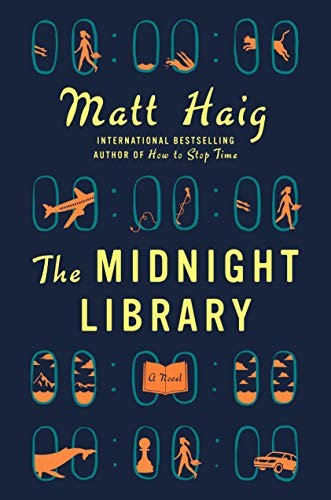
- The Midnight Library by Matt Haig — parallel lives and the question of which version of your existence was the real one, played as an existential fable that echoes North Woods’s fascination with the paths not taken by the people who passed through the house. The Midnight Library discussion guide.
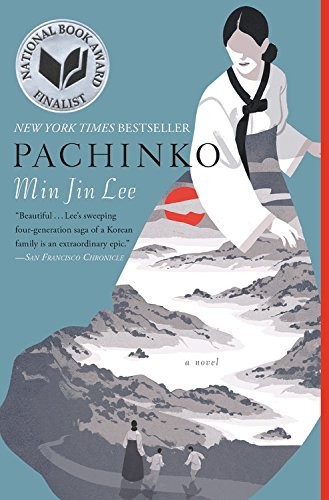
- Pachinko by Min Jin Lee — four generations of a Korean family in Japan, navigating identity and belonging across nearly a century with the kind of structural ambition and historical sweep that Mason brings to a single patch of Massachusetts woods. Pachinko discussion guide.
Read North Woods with neighbours in a Mutuals circle. Learn how to run a great reading-circle discussion. Explore more literary fiction picks for book clubs.
About Mutuals
Mutuals matches you with a handful of neighbours whose reading taste overlaps with yours into a local reading circle close to home: monthly meetups, no app fatigue. Free to sign up; you only pay $15 if a circle actually forms around you. If you want to read North Woods with people who live nearby and argue about whether the house or the apple trees are the real protagonist, that’s literally what we do.
Imagine reading North Woods with a handful of neighbours who love it too. mutuals matches you with local readers who share your taste. Free to join, and just $15 on the day your circle forms.
Match with neighboursMore guides like this
From the blog
Discussion guide by the mutuals team. Questions are original.
More book guides