The Maid Discussion Questions & Book Club Guide
by Nita Prose
Want to read The Maid with a few people nearby?
About The Maid
Molly Gray is a hotel maid who loves her job — the ritual of turning a messy room into a perfect one, the rules that tell her exactly what to do. She is neurodivergent (the book never names a diagnosis) and struggles to read people’s intentions, relying instead on a mental catalogue of social scripts her beloved Gran taught her. When Molly discovers a dead guest in a suite at the Regency Grand, she becomes the prime suspect — not because the evidence points to her, but because the detectives can’t parse her flat affect and unusual mannerisms. Nita Prose’s 2022 debut is a cozy mystery built around a character who sees the world literally, and it works because Molly’s perspective makes the reader question who actually misreads whom. Book-club hook: it’s lighter than most club picks and generates a surprisingly sharp conversation about who society treats as suspicious.
Discussion questions for The Maid
The book never gives Molly a clinical diagnosis. Did that choice feel respectful — leaving room for readers to see themselves in her — or evasive? Would naming a condition have changed how you read the character?
Molly takes people at face value, which makes her both endearing and vulnerable. At what point did you start worrying for her rather than charming along with her — and what triggered the shift?
Gran is the moral backbone of the story even though she’s gone before the plot really begins. How does Molly’s memory of Gran function in the novel — as grief, as guidance, or as a kind of ventriloquism where the author speaks through a dead character?
The Regency Grand is rigid, hierarchical, and obsessed with appearances. Why is a hotel the perfect workplace for Molly, and what does the book suggest about environments that reward rule-following without rewarding understanding?
Several characters manipulate Molly by exploiting her trust. Did the novel make you angry at those characters, at the systems that left Molly unprotected, or at Molly herself for not seeing it — and what does your answer reveal about how you think about vulnerability?
The detectives read Molly’s behaviour as suspicious precisely because it doesn’t match their expectations. How does the book use the investigation to argue that the justice system mistakes neurotypical presentation for innocence?
Prose writes a cozy mystery — a genre built on warmth, low stakes, and satisfying resolution. Did the cozy framework serve Molly’s story well, or did it sand down edges that a darker telling would have sharpened?
Molly’s friendships with the hotel doorman and the kitchen staff are among the most genuine relationships in the book. What do these friendships have in common, and why do they work where Molly’s romantic relationship doesn’t — at least not right away?
Class runs quietly through the entire novel. Molly cleans rooms for wealthy guests who barely see her. How does the book connect her social invisibility as a maid with her social invisibility as a neurodivergent person?
Gran’s aphorisms — polished, quotable, sometimes overly tidy — are Molly’s operating system. Did they feel like wisdom or like a coping mechanism that only works until the world gets complicated enough to break it?
The resolution wraps up neatly: the guilty are caught, Molly is cleared, and her life improves. Was that ending earned by the story, or does the cozy genre demand a tidiness that undercuts the harder questions the book raises?
If you were Molly’s coworker and noticed someone taking advantage of her, would you intervene — and how would you do it without being condescending? Where is the line between protecting someone and removing their agency?
Themes in The Maid
The world through literal eyes
Molly doesn’t read between lines because she doesn’t know the lines are supposed to have gaps. Prose uses this not as a deficit but as a lens — Molly sees the dirt others walk past, the micro-expressions others decode automatically, the social contracts others sign without reading. The result is a narrator who makes the familiar strange and forces the reader to notice how much of daily life depends on unspoken agreements that nobody bothered to write down.
Invisibility as both protection and trap
Being unseen keeps Molly safe in some ways — she moves through the hotel without attracting attention, she does her work without office politics, she avoids the friction that comes with being noticed. But the same invisibility means nobody sees her being manipulated, nobody checks whether she understands what she’s agreeing to, and when she needs to be believed, there’s no one in the room who was paying attention. The novel asks whether invisibility is ever really a choice or just the shape powerlessness takes when it’s quiet enough.
Kindness as a survival strategy
Gran taught Molly that kindness is what you do when you don’t know what else to do. In the novel, kindness is Molly’s default mode — she’s generous, she’s polite, she assumes the best. But Prose complicates this by showing that kindness without discernment is dangerous. Molly’s goodness is what draws people to her and what makes her exploitable. The book doesn’t argue against kindness, but it insists that kindness alone isn’t enough to navigate a world that doesn’t always return the favour.
Who gets believed
When the police question Molly, her honesty works against her. She answers too precisely, doesn’t perform distress the way they expect, doesn’t fill silences with the nervous chatter that signals innocence to people who have never thought about what innocence actually looks like. The novel makes a quiet, persistent case that credibility in the justice system — and in daily life — is distributed based on how closely you match a template that was never designed with people like Molly in mind.
Suggested book club format
- Length: 304 pages, roughly five to six hours of reading.
- Session count: One session works well. The mystery plot pulls readers through quickly, and the book’s emotional weight is steady rather than back-loaded, so there’s no natural reason to break it in two.
- Icebreaker: “Is there a routine or ritual that makes your day feel right — something that, if it gets disrupted, throws everything off?”
- Moderator note: The overall tone is light and warm, but the story involves a murder, the sustained manipulation of a vulnerable person, and a drug-trafficking subplot. Molly’s neurodivergence is central to the plot, so set ground rules about discussing disability with care — specifically, avoid framing Molly’s traits as things to be fixed. If anyone in the group is neurodivergent and wants to speak to their own experience, make space for that without putting them on the spot.
How a real club read this
Share how your club discussed The Maid — tell us about your reading circle.
More books like The Maid
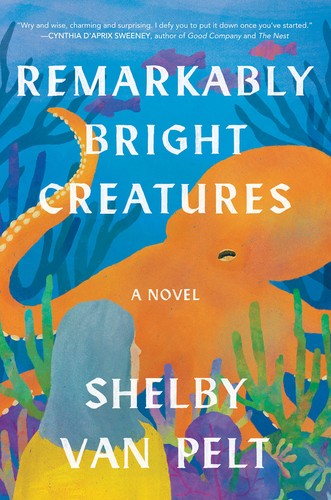
- Remarkably Bright Creatures by Shelby Van Pelt — an outsider narrator who notices what everyone else misses, wrapped in grief and quiet mystery and an octopus with opinions. Remarkably Bright Creatures discussion guide.
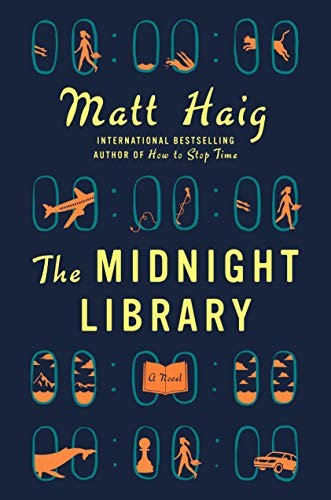
- The Midnight Library by Matt Haig — regret, mental health, and the question of which version of your life is the one worth living. The Midnight Library discussion guide.
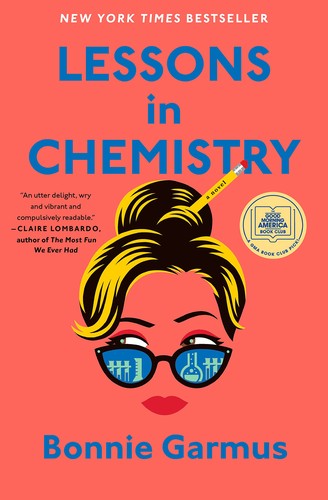
- Lessons in Chemistry by Bonnie Garmus — a woman the world refuses to take at face value, told with fury and dark comedy and a deep patience for people who don’t fit the expected mould. Lessons in Chemistry discussion guide.
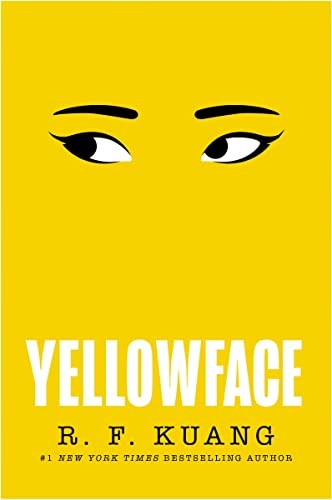
- Yellowface by R.F. Kuang — identity, stolen work, and the way the world decides who deserves credit, told from inside a mind that never stops rationalizing. Yellowface discussion guide.
Read The Maid with neighbours in a Mutuals circle. Learn how to run a great reading-circle discussion. Explore more discussion guides for book-club picks.
About Mutuals
Mutuals matches you with a handful of neighbours whose reading taste overlaps with yours into a local reading circle close to home: monthly meetups, no app fatigue. Free to sign up; you only pay $15 if a circle actually forms around you. If you want to read The Maid with people who live nearby, that’s literally what we do.
Imagine reading The Maid with a handful of neighbours who love it too. mutuals matches you with local readers who share your taste. Free to join, and just $15 on the day your circle forms.
Match with neighboursMore guides like this
From the blog
Discussion guide by the mutuals team. Questions are original.
More book guides